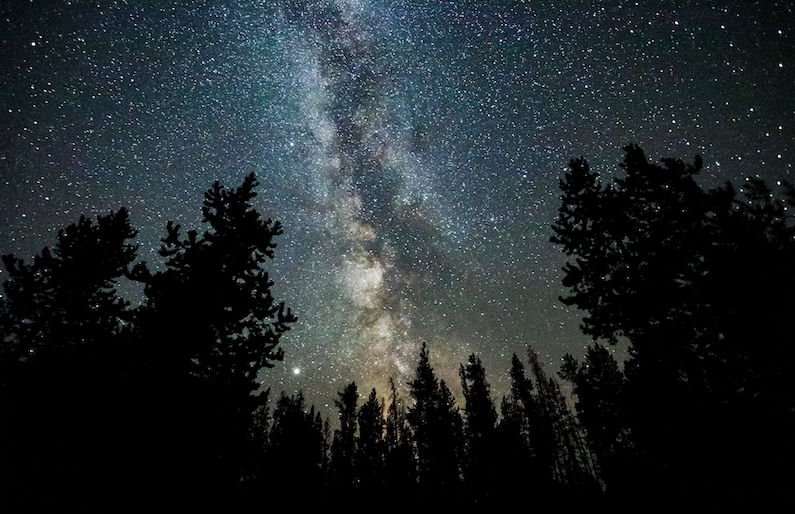
As much as Boise is growing, it’s still the most geographically isolated major U.S. city, and that means we’re surrounded by places with incredible opportunities to behold the night sky.
📍 Where?
- To feel like a speck of dust (but in a good way), the Central Idaho Reserve in the Sawtooths, about two hours from Boise, is the place to be. It’s the only Dark Sky Reserve in the U.S. as designated by the International Dark-Sky Association.
- The two next-darkest skies in Idaho can be found at the Craters of the Moon National Monument, three hours to the east, and the City of Rocks, three hours to the southeast.
- The new observatory at Bruneau Dunes State Park, just an hour out of town, is available for public use and was designated as a dark sky park last month.
- Even nearer by, try the backroads (pack it in, pack it out, etc.) in the Morley Nelson Conservation Area, less than an hour south of Boise.
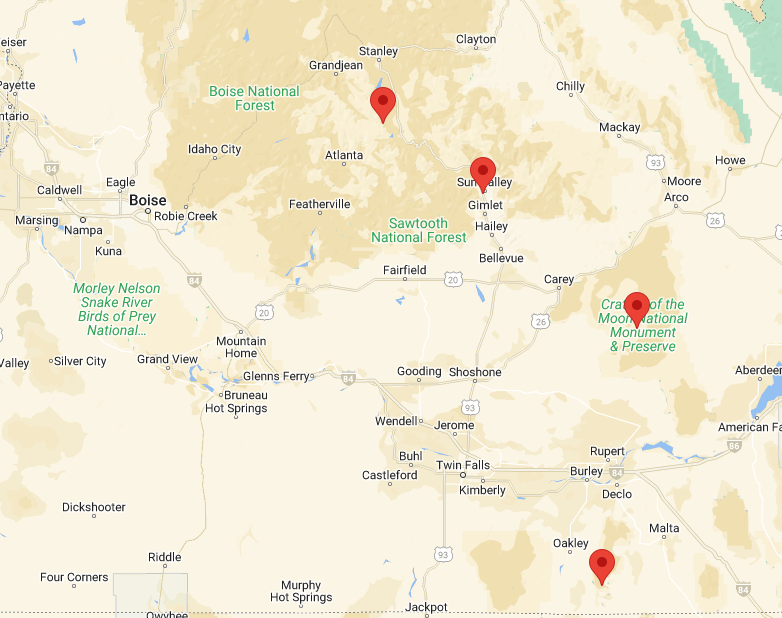
Bruneau Dunes State Park became the fifth designated dark sky place in Idaho, and the closest to Boise. (International Dark Sky Association)
🗓️ When?
The Galactic Center of the Milky Way is best seen between March and September, with the peak in July and August. A bright moon can also limit visibility — luckily for us, next Monday, July 15, is a new moon, so it won’t put off any distracting light. You’ll have the best luck between midnight and 5 a.m.
Happy stargazing! Remember to use binoculars if you’re trying to identify planets or specific stars. And even if you’re not on official wilderness land, respectful outdoor etiquette still applies.