
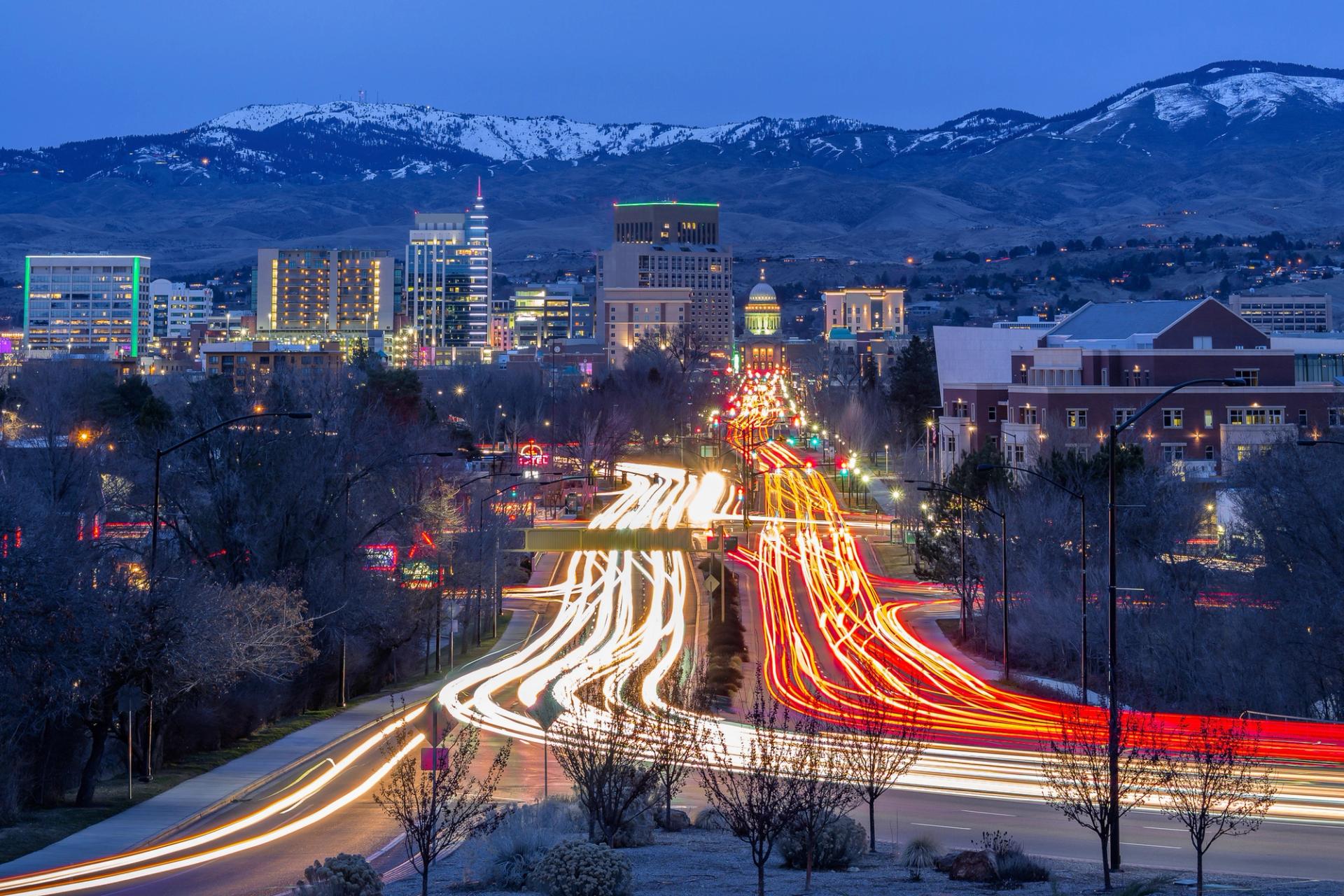
Remember the days when you could easily drive anywhere in Boise in under 20 minutes? Those days might be gone and traffic is getting worse. So, what are the roads that should be avoided in the short term? And what’s the answer to Idaho’s growing traffic problem in the long term?
How Bad is Traffic?
The short answer: not that bad! According to data from the Compass Community Planning Association of Southwest Idaho (COMPASS), average commute times only increased slightly between 2010 and 2018. The problem is that an average doesn’t tell the whole story. If you’ve ever commuted by car, you know that any slight delay — be it construction, accident, or weather related — can have a large impact on your drive. Add Boise’s growth into the mix and it’s easy to see why traffic continues to get worse.
Currently, Ada and Canyon Counties see an average of 1.8 million passenger vehicle trips per weekday. COMPASS projects that in 2050, that number will go up to 3 million. And the cost is two-fold: A 2018 study by INRIX found that each person in the country loses 97 hours and $1,348 per year due to congestion.
The Worst Roads in the Treasure Valley
Bad traffic on the interstate is almost expected, but when it comes to bad driving experiences elsewhere, Franklin Rd., Victory Rd., and Chinden Blvd. come to mind. And there’s one that might take the cake — I can hear many of you screaming it at your screen: Eagle Road. Not only is it the busiest non-interstate highway in the state, it also has some of the most bustling intersections. So, which of these routes should be avoided?
The more I review traffic counts and conduct my own “on the field” research, the less it is about what roads to avoid, and the more it becomes about when to avoid them. Unfortunately, the answer is most of the time. But if Boiseans must get places and don’t have an alternative to driving, what’s the solution?
How to Kill Congestion
Managing traffic as Boise continues to grow is an important task with difficult decisions at every turn. The idea of widening roads to ease congestion sounds reasonable at first, but research shows that it often has the opposite effect of inducing traffic.
The next best solution could be public transit, which also requires funding and political will to build. It’s especially true in Idaho, where the state legislature does not directly help fund public transportation and leaves it to cities to pull from their general fund. Valley Regional Transit, which does not receive state funding, is partnering with COMPASS to study the options between more lanes, faster buses, or a light rail. We’ll share updates as the study progresses and when it reaches the public comment phase.
Until then, I’ll be daydreaming of a light rail.