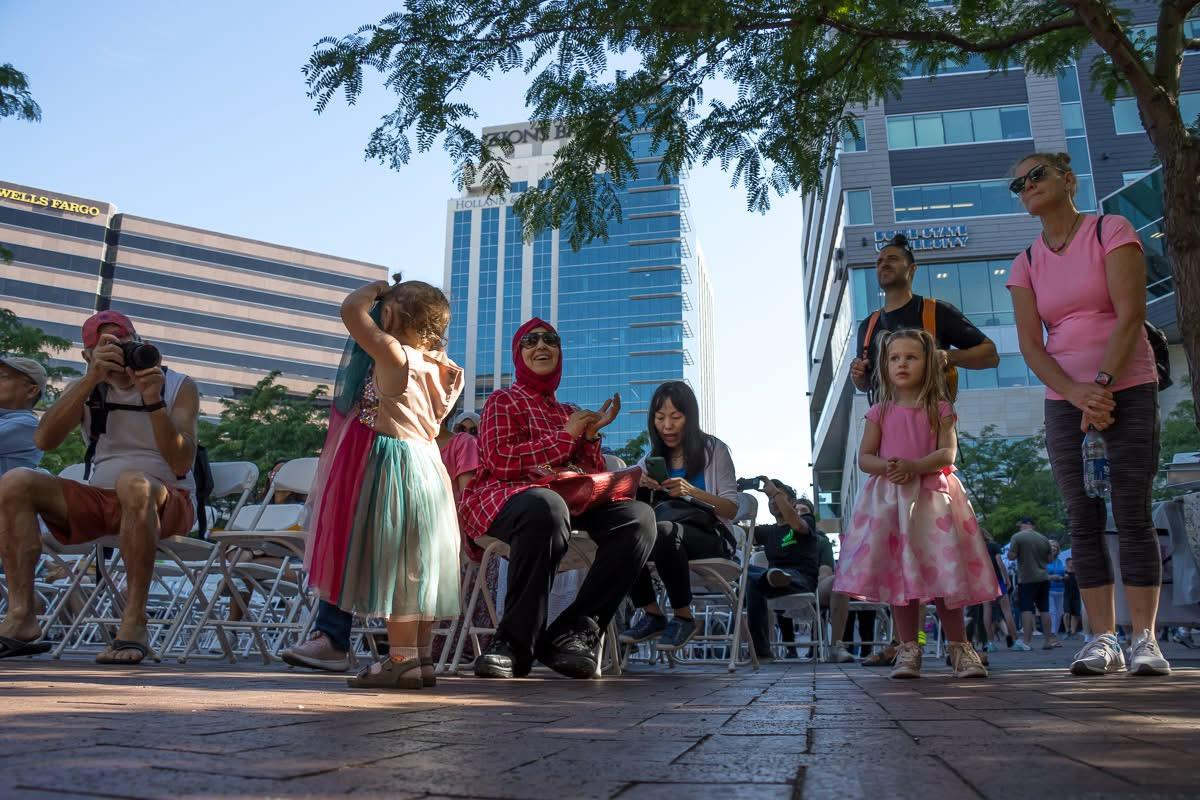
President Donald Trump’s administration was ordered to resume refugee resettlement, but said that it will take several months to comply because of the “deterioration” it caused in resettlement workforces. Idaho Office for Refugees communications manager Holly Beech and Congolese refugee Moses Mukengezi joined the City Cast Boise podcast in February to discuss the freeze — which they say is actually more like a train.
You can have your own opinions on who you like and what you like in the government, but I feel like the Boise community is stronger together and I don't think they're going to lose their identity just because of who's leading the country.
Moses Mukengezi, Community leader and refugee from the Democratic Republic of Congo
Job Cuts and the Slowing of the Train
With the Trump administration pushing job cuts across the federal workforce, it seemed inevitable that refugee resettlement offices would also face job cuts after they were targeted with a funding freeze in late January.
Because of its funding sources, Beech said the Idaho Office for Refugees has not suffered job cuts, but their resettlement agency partners in Boise have. As early as mid-February, NPR reported hundreds of staff cuts and furloughs at agencies (psst…as reported by a Boise State University and The Arbiter alum).
“When the public side is disrupted, everything is,” Beech told Hey Boise, comparing the resettlement process to a train: It takes a long time for it to get back up to full steam. “This is very much still a public-private partnership.”
Maintaining Steam and Finding Support in Boise
The private side of the relationship continues to step up in Boise, Beech said. Faith and humanitarian organizations are working with the Idaho Office for Refugees and whatever resettlement groups can still operate to “make sure no one slips through the cracks.” Beech also urged Boiseans to get engaged with Neighbors United, whether through donations or actions.
“I was at the public lands rally this weekend … and there are so many things that overlap in refugee work just like public lands work,” Beech said. “There is a huge heart for resettlement in Idaho. And I think something you can do is organize and show that on a more public level, [and say] ‘this is something we really care about.’”
Both Beech and Mukengezi mentioned the business communities needing to step in to support the people they rely on employing. In Twin Falls, Chobani has drawn criticism and praise for its support of its refugee workforce for years, and goes a step further to work directly with resettlement agencies.
Both Beech and Mukengezi said that refugees and the communities who work with them are processing their grief. Mukenegezi has family members with medical needs who expected to be in Boise by now, but have been waiting in an anxious limbo for months. Mukengezi himself resettled here in 2007, and wants other refugees to be able to experience the welcome he received in Boise.
“ You can have your own opinions on who you like and what you like in the government, but I feel like the Boise community is stronger together and I don't think they're going to lose their identity just because of who's leading the country.”