| | What Boise's Talking About |
| 🚰 ACHD Forgot a Canal Pipe Existed, Rushes to Repair | This winter, the Ada County Highway District (ACHD) will repair a “catastrophic” stormwater and irrigation canal pipe breakage. ACHD forgot the pipe existed, as it’s likely a half century old or older, and it rusted. As part of the canal, the pipe, near Hill Road and 32nd Street, serves thousands of Boiseans and has 50 storm drains upstream. [Idaho Statesman] | | 🤝🏻 Garden City Mayoral Forum | Like Nampa, Garden City will elect a new mayor this year, with its incumbent stepping down. Two of the three contenders for the seat, College of Western Idaho (CWI) board trustee Molly Lenty and City Council Member Bill Jacobs, spoke of their goals and views at a forum on Tuesday. [BoiseDev] | | 💬 West Ada Board Trustee Forum | Two candidates for the West Ada School District board spoke at a candidate forum on Tuesday, while the incumbents in each of their races were absent. One is Meghan Brown, a teacher running against Angie Redford in Zone 3, and the other is Dara Ezzell-Pebworth, a social worker running against Lori Frasure in Zone 1. [Idaho EdNews] | | ⚽ Boise Soccer Legend Joins AC Boise Ownership | Athletic Club Boise has sold out its season tickets for 2026, breaking a United Soccer League (USL) record for a new franchise. Now, it’s adding a new but locally familiar name to its ownership group: Sofia Huerta, a Seattle Reign professional player and Centennial High School graduate. [Idaho Press] |
|
|
| | | | Experience a staycation in style at Black Rock Mountain Resort. Use promo CITYCAST for 20% off, a $50 resort credit, and 2pm late checkout. Sip cocktails at On the Rocks Bar or savor dinner at Overlook Restaurant, and make it a getaway to remember! |
|
|
| | A Brief History of Colonization in the Treasure Valley (Ahead of Indigenous People's Day) |
| 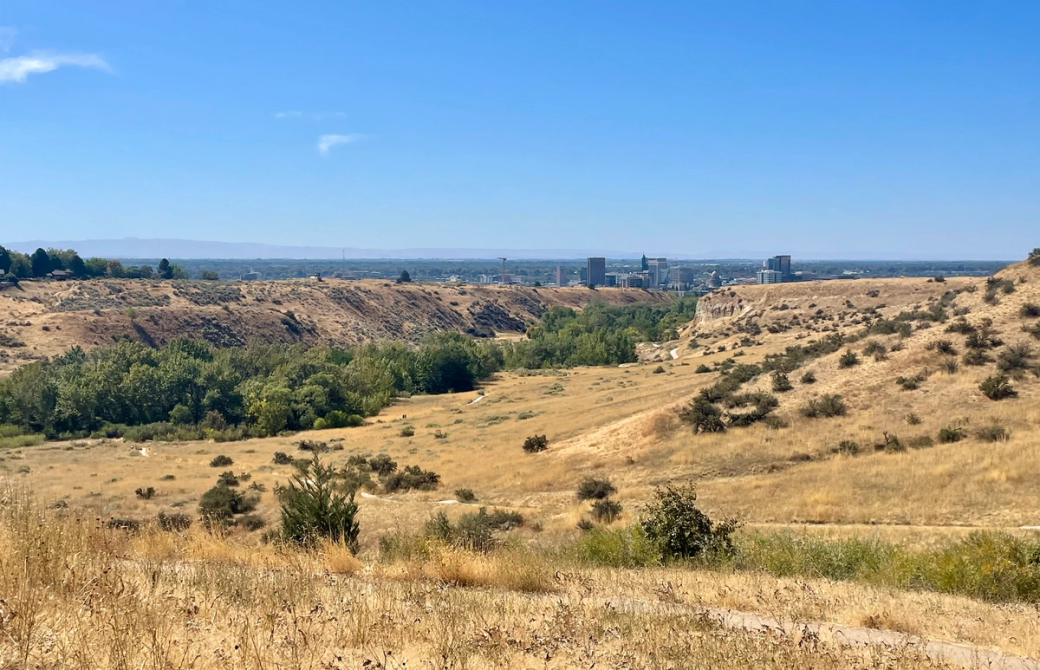 | Before Europeans arrived, this valley was a gathering place for many peoples. (Blake Hunter / City Cast Boise) |
| Indigenous People’s Day is approaching, offering an extra incentive to learn how the land we call home was colonized. As one state Senator showed during a candidate forum in 2024, many Idahoans could use the education. | | Republican incumbent Sen. Dan Foreman reportedly yelled at Trish Carter-Goodheart, a Native American candidate for the state House of Representatives, to “go back where she came from” after she insisted that racism exists in Idaho. While Foreman’s outburst at Carter-Goodheart happened in North Idaho, the incident shines a light on how a denial of history and genocide has been allowed to thrive — not just in remote small towns, but throughout our state. | | Who is Indigenous to the Treasure Valley? | Today, the peoples indigenous to the Boise valley are known as the Burns Paiute of Oregon, the Confederated Tribes of Warm Springs of Oregon, the Fort McDermitt Paiute and Shoshone of Nevada, the Shoshone-Paiute Tribe of Idaho and Nevada, and the Shoshone-Bannock of Idaho. | | While non-Native Americans often call themselves “native,” it’s important to note that white Idahoans can claim at most a handful of generations who’ve lived here. People in the tribes listed above, however, have lived here for dozens of generations, and have a completely different relationship to the land. | | First Settlements & Treaties | Miners found gold in the Boise Basin in 1862, and within a year, Fort Boise was built, on the present-day grounds of the Veterans Affairs Hospital. The original Fort Boise was built where Parma is today by the Hudson’s Bay Company in 1834 and was abandoned in 1854. | | In 1863, Caleb Lyon — the territorial governor of Idaho — helped draft the Treaty of Fort Boise for the Shoshone people in the Boise valley to sign. The treaty ceded a majority of their ancestral land in the valley, but reserved a share of fisheries and tracts of land 30 miles on either side of the Boise River for the Shoshone. | | However, Congress never ratified the treaty, meaning it has no legal standing and making the Treasure Valley unceded land. The Shoshone Nation argues that they still have a claim to it, because legally, they never gave it up. | | Forced Removal & Genocide | By 1869, tensions had built between white settlers and the Indigenous tribes of the area. A reservation for the Shoshone-Bannock people had been established in eastern Idaho, the current-day Fort Hall Reservation. | | The U.S. Army sent cavalry forces to the Boise valley, and forcibly removed families and forced them to march east. They reported no accidents, or casualties — but every surviving Indigenous record indicates that dozens of people either died in the icy conditions or were killed by the military. | | The Shoshone-Paiute Tribes of the Duck Valley Reservation in Owyhee County allied with Bannock people in a war against the U.S. military, and were forced either onto the current-day Duck Valley Reservation, or into a prisoner of war camp in Yakima, Washington. | | Recent History at a Sacred Site | In 1990, the Boise Zoning and Planning Commission was planning a development on Eagle Rock, which settlers called Castle Rock. This land — in the Boise foothills near the Old Penitentiary — was a sacred area, with numerous burial sites. | | Shoshone-Bannock Tribes, still maintaining an ancestral connection to the land, wrote to the commission in opposition to the development, saying that after such a dark history of violence, “Now, you wish to build on the graves of our ancestors … Leave our people at peace in their own land.” | | After the tribes spoke out and were joined by the East End Neighborhood Association in defending the land against development, the project was stopped. The Castle Rock Reserve was also renamed the Chief Eagle Eye Reserve in honor of a Shoshone leader whose people lived near Weiser. | | In 2017, then-Boise Mayor David Bieter declared June 8 to be Return of the Boise Valley People Day. Annually, members of the five nations and tribes that originally inhabited the valley gather to honor their ancestors and reconnect to the land they were removed from. |
|
|
| | Now go enjoy this fall day, which might be the best of Boise’s seasons! |
| |
|
| |
|


