This weekend, Boiseans will celebrate Labor Day by sleeping in, going camping, enjoying the last weekend of summer, and generally doing their own thing. But 110 years ago, many Boiseans spent Labor Day near the Natatorium, enjoying the day off — but also marshalling power for worker’s unions.
This blessed old republic cannot exist without a high standard of citizenship and a high standard of citizenship cannot be maintained except through a high standard of wages for labor.
William Borah, U.S. Senator
The Boise Newspaper You’ve Probably Never Heard Of
Those Labor Day festivities were enthusiastically reported by The Gem Worker and the Idaho Labor Herald, a newspaper that published relatively briefly, from August 1913 to January 1917.
During those Industrial Era years, trade unions were very popular and prioritized communicating to the public through newspapers. Where there was a chapter of the American Federation of Labor, they tried to sprout a newspaper.
The editor of the Gem Worker was John Alden, who frequently clashed with the American Federation of Labor. According to the Idaho State Historical Society, he believed “that as long as the laborers were provided good wages and safe working conditions, employers were free to pursue profits,” while the national network believed every Labor newspaper had the responsibility of painting employers as “‘nothing more than a flea on the laborer’s back.’”
Alden worked with the local American Federation of Labor chapter, however, and the state and local chapters. The local chapter — the Boise Trades and Labor Council — is the same as today’s Idaho State AFL-CIO chapter.
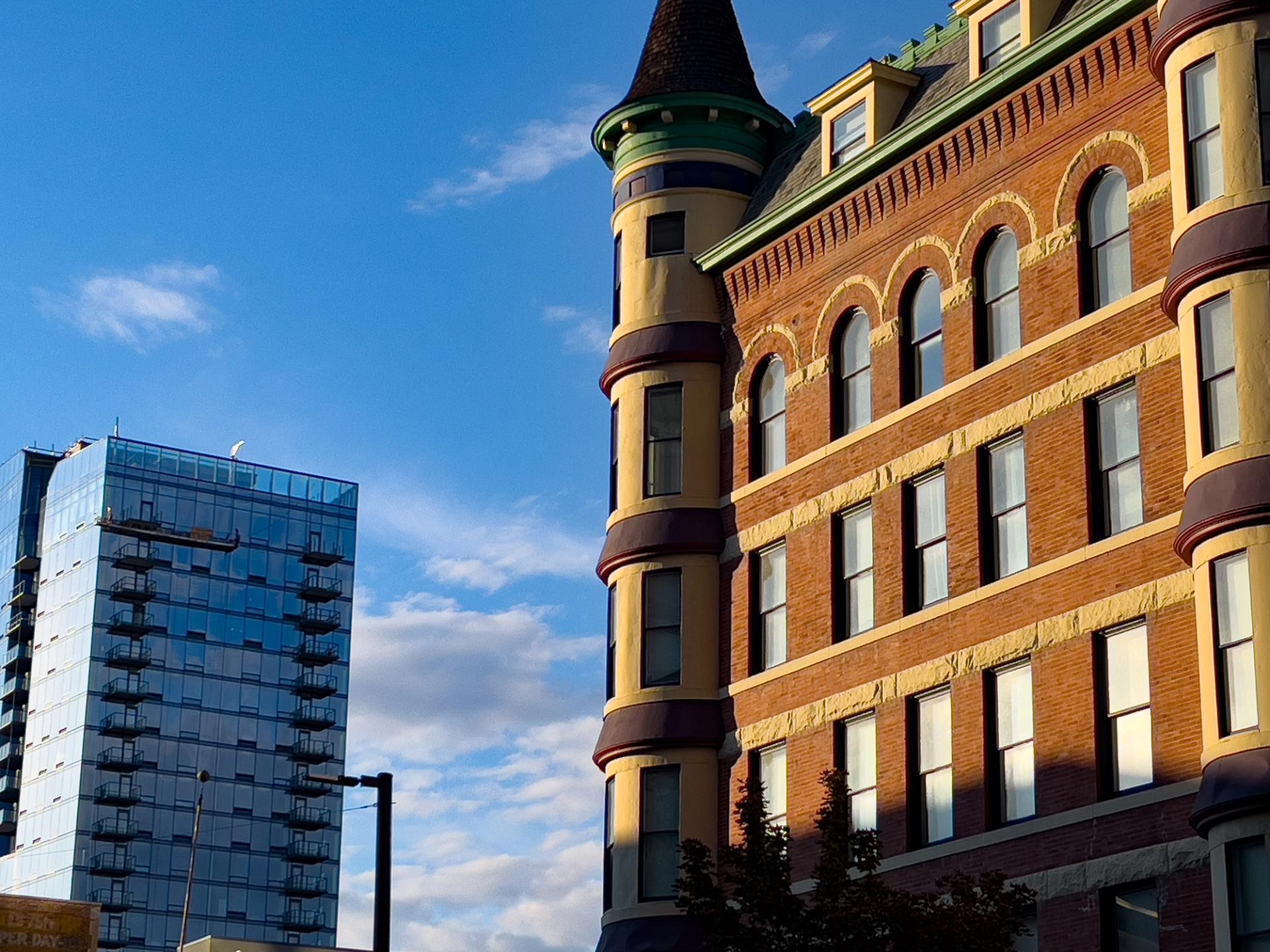
Alden was also the namesake of a downtown building at 10th and Main, which was renovated and renamed after its new tenant, Kount, in 2018.
The newspaper’s front pages are viewable on the Library of Congress’ website, and on record at the Idaho State Historical Society, University of Idaho, and Idaho State University.
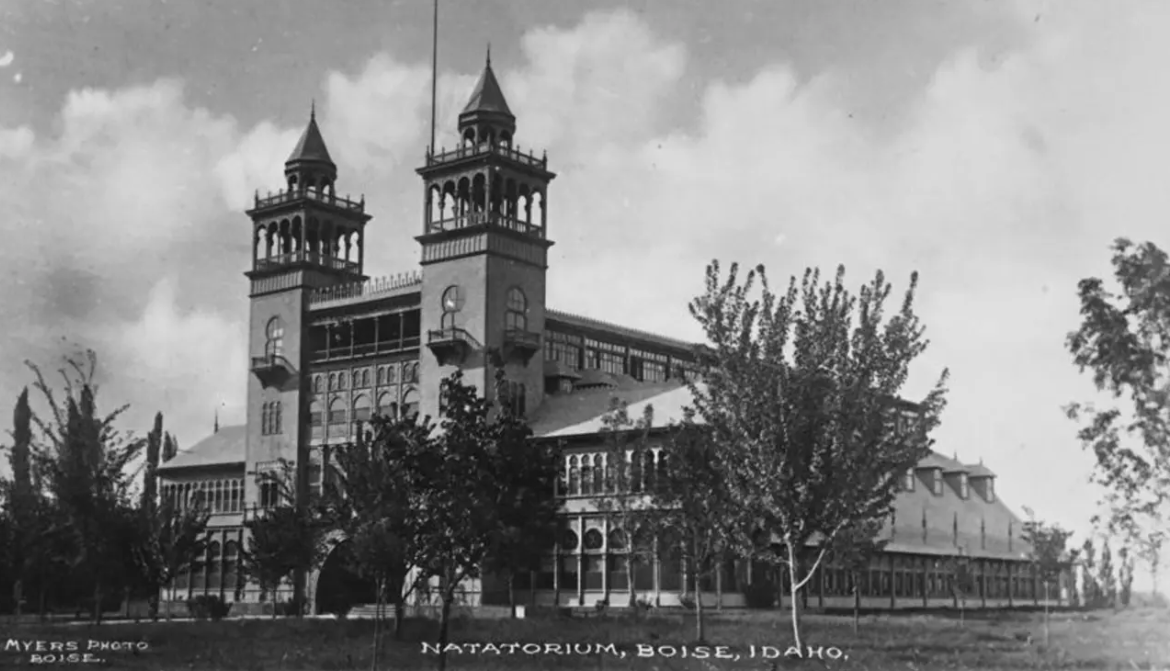
Most of us know about the Natatorium's glorious old facade, but it was actually just the first in a one-two amusement punch in the neighborhood. (Idaho State Historical Society)
What Were Labor Organizers Talking About in the 1910s?
People still had fun on Labor Day in 1915. Organizers of the local trade council held the Labor Day festivities at White City Amusement Park, which had a nearly half mile long wooden rollercoaster, a train to the Natatorium (the original one), and a handful of other rides.
There were pushmobile races, foot races (the prize for which was a box of cigars), a women’s nail-driving competition, an apple eating contest — all the classics.
There were also speeches by the organizers, a State Senator, and United States Senator William Borah.
Sen. Borah finished the speeches on a high note: “This blessed old republic cannot exist without a high standard of citizenship and a high standard of citizenship cannot be maintained except through a high standard of wages for labor.”