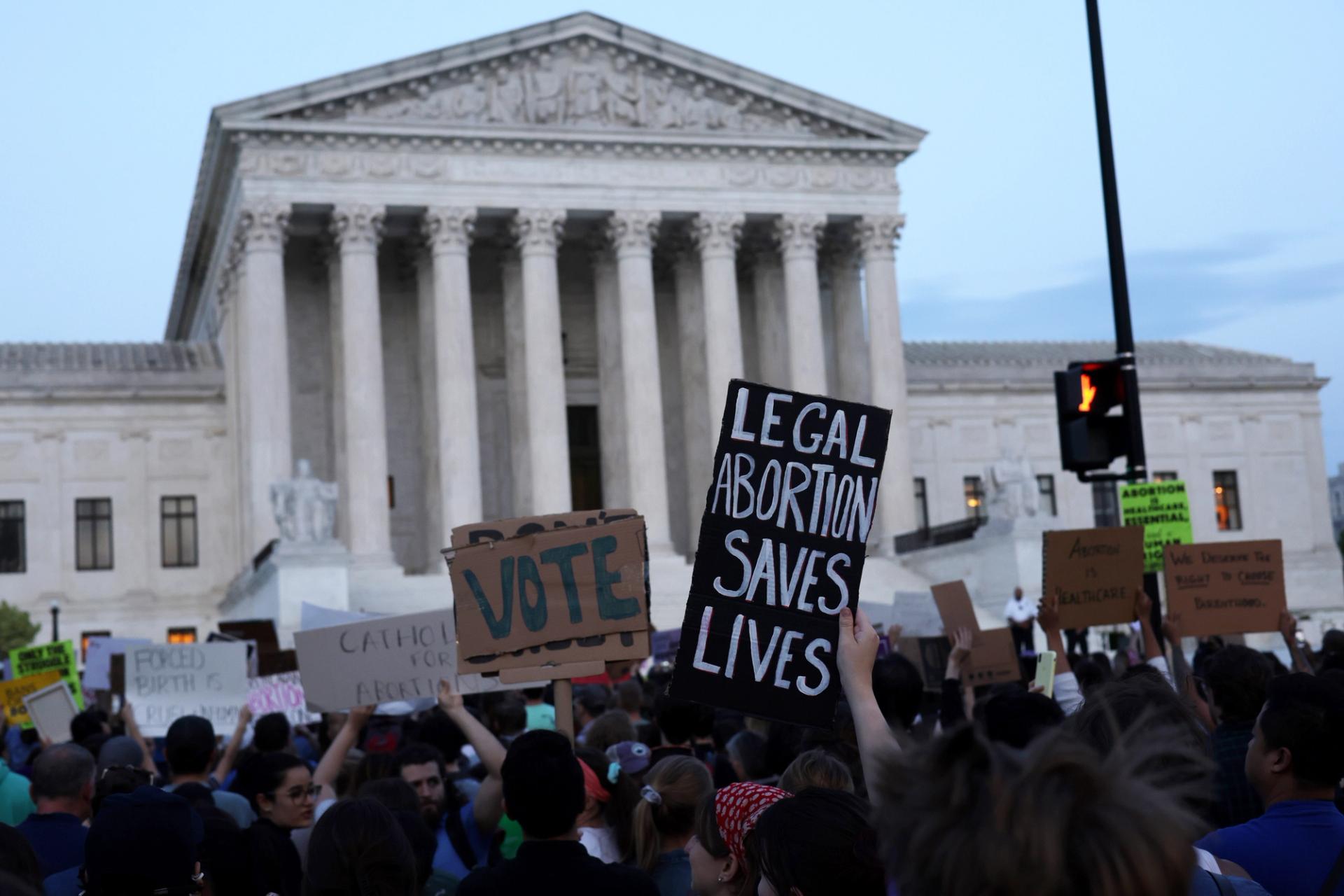
Idaho’s abortion bans are here to stay for the foreseeable future. But a series of challenges from citizens, physicians, and governments are attempting to define the parameters of those bans, after the Idaho Legislature added no new abortion bans or caveats.
Ahead of the session, some Republican lawmakers signaled an interest in changing state law from allowing a doctor to perform an abortion only if a patient’s life is at risk to permitting abortions if a patient’s health is at risk, but such an edit never developed.
Now, the only possible legal developments will take place in courtrooms, while the ranks of OB-GYNs who’ve left the state in the last two years are almost certain to keep growing.
What the Supreme Court Will Consider
That includes the U.S. Supreme Court, where the federal Department of Justice will argue that Idaho’s most extreme abortion ban violates the Emergency Medical Treatment and Labor Act (EMTALA) next Wednesday.
EMTALA requires any hospital that receives Medicare funding to provide stabilizing care in emergency rooms. Since an abortion could be necessary to stabilize a patient, the federal government says that the abortion ban conflicts with EMTALA.
The Supreme Court has two opposing decisions to weigh. The Ninth Circuit Court of Appeals sided with the Department of Justice, saying that EMTALA trumps Idaho’s abortion ban.
In Texas, however, the Fifth Circuit Court of Appeals came to the opposite conclusion in similar cases. The court’s decision should come by early July.
Status of Idaho’s Other Bans
But surely Idaho taxpayers are paying to defend more than one abortion ban, you might say — and you’d be correct!
- Along with the EMTALA case, Adkins v. Idaho seeks to add exemptions to the state’s bans.
- There’s also Masumoto v. Labrador regarding the state’s “abortion trafficking” ban, and the weaker six-week abortion ban.