
So far in 2025, the briefest glance at headlines or social media can send you into a tailspin of contemplating your place in the politics of the day. But just like taking care of your community, sometimes it’s best to go back to the basics when it comes to engaging with Idaho legislators. Send them notes, and stop by to say hi — or say your piece.

How Can I Reach My Legislators?
Sen. Melissa Wintrow, a longtime Democrat serving in Boise’s 19th legislative district, joined the City Cast Boise podcast in January to prepare us for the legislative session.
While it’s an old school technology — which Sen. Wintrow jokingly notes is apt given the average age of legislators — one of her favorite ways to hear from constituents is surprising and simple: She loves postcards.
“When I get them, it’s something that’s really attractive to me,” she said. “I flip it over, I read, it’s easy, it’s quick. I know where somebody stands.”
For quicker and more frequent correspondence, she recommends emailing committee members and cc’ing your personal legislators. But keep it brief and straight to the point. Legislators are mainly beholden to their constituents at the ballot box, and there is no law requiring that they read your entire email.
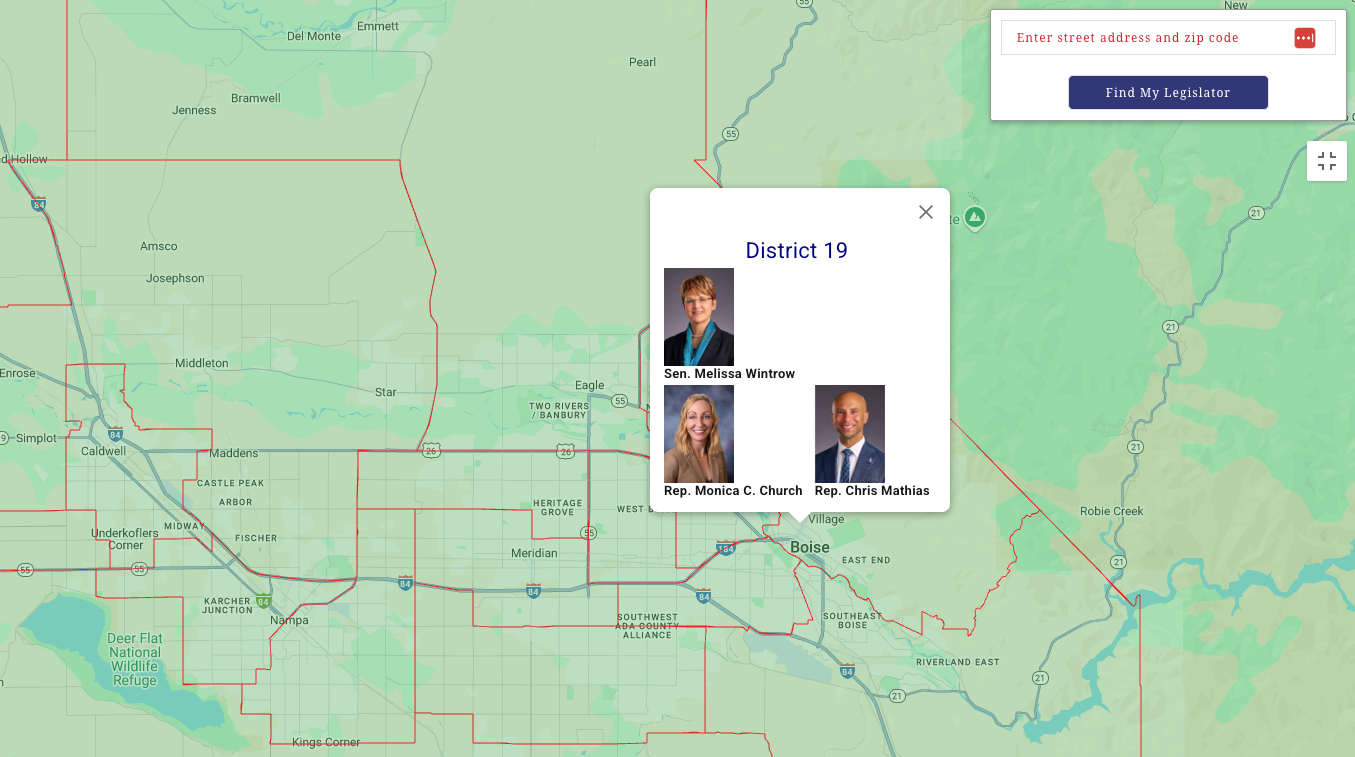
Here’s one way to find your legislator. (Legislative Services Office / Google Maps)
Getting Comfortable Testifying
If you’re heading to the Capitol or logging in to give remote testimony for the first time, there are a few basics to get under your belt. Your first order of business is to get comfortable.
“Recognize that the architecture makes you feel a certain way,” Sen. Wintrow said. “And be cognizant of it. I try to get as many people in as I can so they feel more comfortable because it is kind of a cold, intimidating building.”
So bring a friend, or have a plan to call someone right after for support.
I also recommend tuning in to a committee meeting online before giving your first testimony. One protocol to keep in mind is that you should address the chair by their chair title and name, and then the committee as a whole (example: “Chairwoman VanOrden and members of this committee, thank you…”).
Additionally, time yourself giving your testimony before you go and be prepared to be interrupted if you go over your allotted two minutes. Any applause, outcries, signs, or profanity will be interpreted as disruptive, and you’ll be asked to leave. As we saw a couple weeks ago, though, leaving a committee room can in itself be a form of protest.
Read through the Legislature’s guidance for testifiers, and remember it’s okay to be nervous and make mistakes! Offer support to others, and call for support when you need it — we all do.