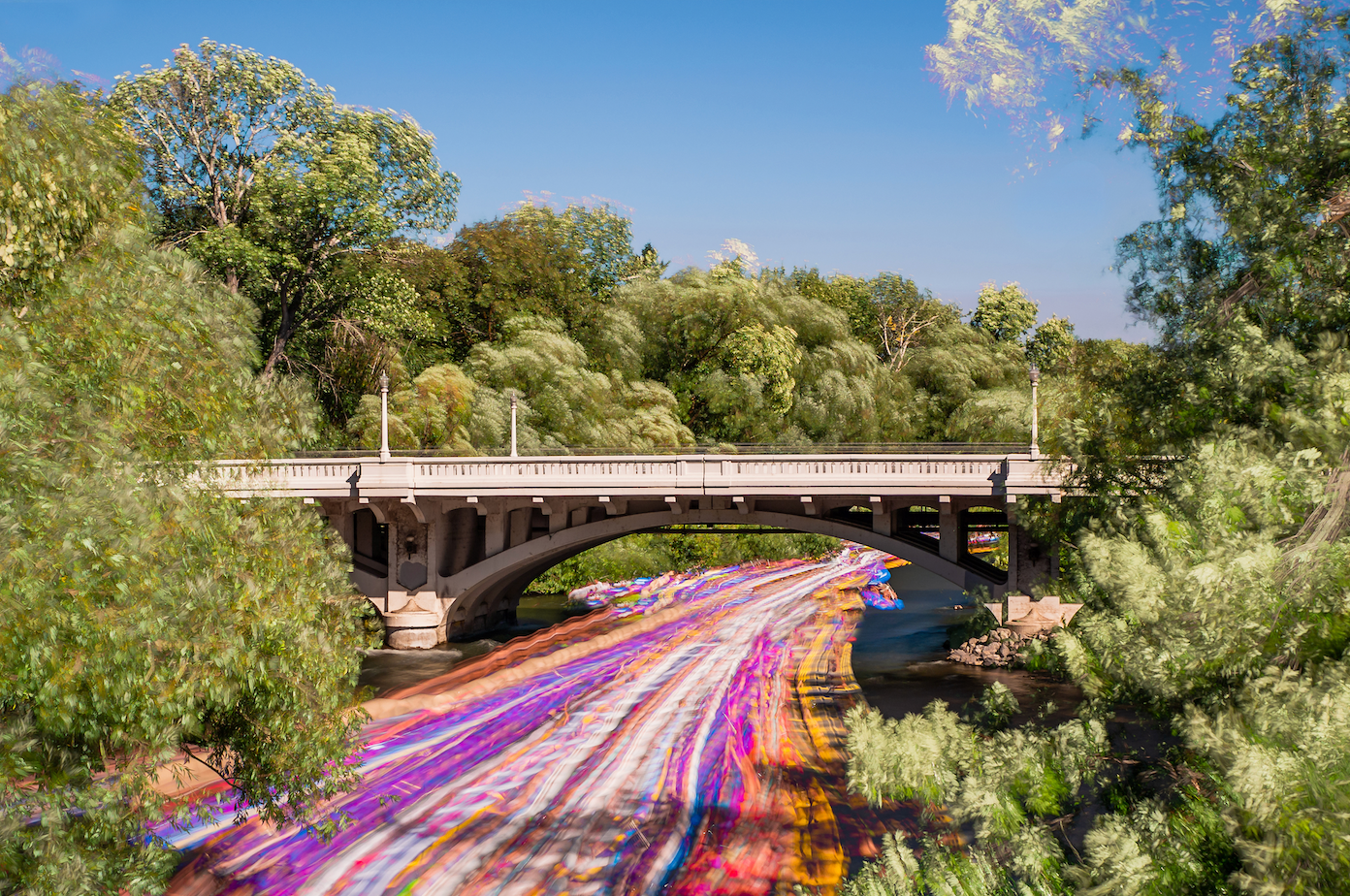
Your social media might be showing you Chunk, Alaska’s Fat Bear Week champion, but in Boise, maybe we need a Fat Spider Week. If you’re arachnophobic, I’d recommend you don’t look under any bridges along the Greenbelt for the swollen, quarter-plus-sized spiders lurking there.
What Kind of Spiders Are They?
Sure, there’s something unsettling about seeing such large spiders, but let’s focus on the ones you’re most likely to see and be startled by this time of year.
They’re called orb-weaver spiders, of which there are many different types. The most distinct and common in Boise right now are the cat-faced or jewel spiders (Araneus gemmoides). They’re called cat-faced because their faces are only slightly feline, but punctuated by two little horns on the back of their abdomens that frame the face like cat ears.
Why They’re Actually Great for Boise
Most orb-weavers, including the cat-faced spider, are non-venomous to humans. And — as is clearly visible by their large webs — they play a critical role in keeping the populations of other insects at bay, especially mosquitoes.
While that may sound like a small convenience, spiders’ role as predators are actually crucial on a global scale, reducing diseases and crop losses.
Why are they so big right now? You guessed it: The largest are the females who are currently carrying eggs. After laying a sac of eggs, the females will die and the sac will attempt to survive through the winter, after which
What Your Fellow Boiseans Are Saying
One former PhD student at Boise State wondered why orb-weavers seem to crowd the Boise River, rather than avoid the loud, rushing water. In 2020, he said: “If we do not understand how other things perceive this world, we will fail at many things: like wildlife management, why our pollinators are declining and pest control.”
From a slightly more reactive place, one Reddit user posted this fall “What in the hell are these spiders on the bridge over the river??”
Other Boiseans quickly hopped in to calm them down. Some found a healthy balance: “The Greenbelt tunnels house spiders that I’ve only seen in my nightmares. Nothing but respect for their hard work in nature.”