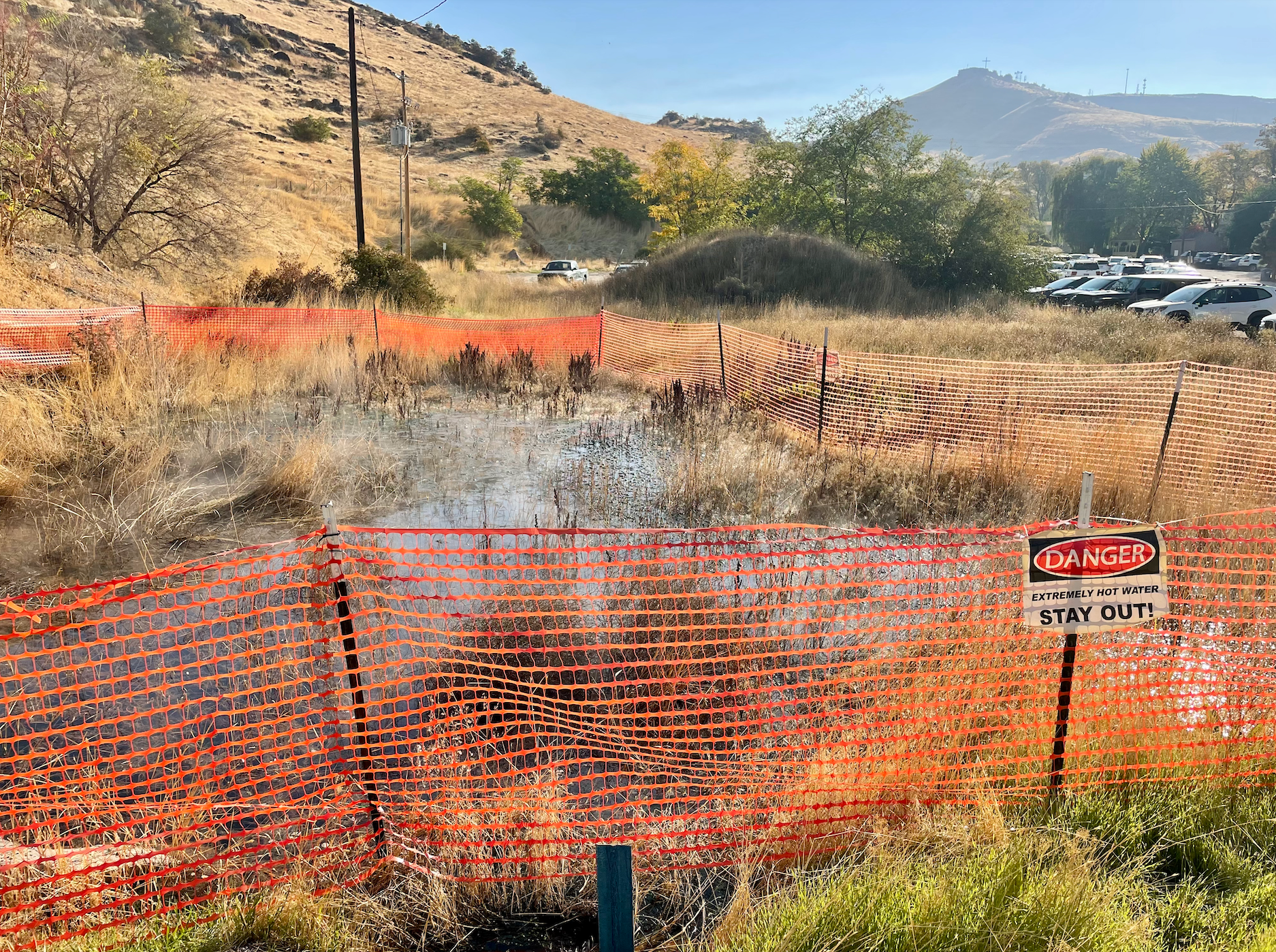
At the eastern tip of Eagle Rock Park, a little stream of water cuts through the grass and into the autumn-reddened Oregon grape bushes bordering Chief Eagle Eye Reserve. It’s a steamy 100°, and fuzzy green algae have grown to line its banks in just a few short weeks.
For millenia, a similar stream ran here. It’s been at least 50 years since it’s been allowed to surface, and will redisappear — most likely for decades again — in the coming days.
Why Is This Water Here?
The stream starts in a large hot water pond that sprung up after the Boise Warm Springs Water District shut off the pumps to its geothermal wells, the oldest in the nation. No photographs of the original springs exist (that I’ve found — I’d love to be wrong about this!), but today’s pond is bordered by an orange safety fence with warnings to keep out. The 170°-175° water would cause instantaneous burns on humans.
As I learned during a recent tour, the district replaced the mainline that carries hot water to about 300 houses on Warm Springs Avenue this fall, and the only way to do that was to shut off the two pumps that run its geothermal wells.
Since 1892, those pumps have kept the water table between 100 and 200 feet underground, drawing from it and lowering the table during the winter when demand for the water, which is primarily used for heating, is highest. In the summer months, the water rises within 50 feet of the surface.
The district’s new mainline is underground, so this weekend after some final tests, the temporary pond sitting on the edge of the Table Rock parking lot will disappear.
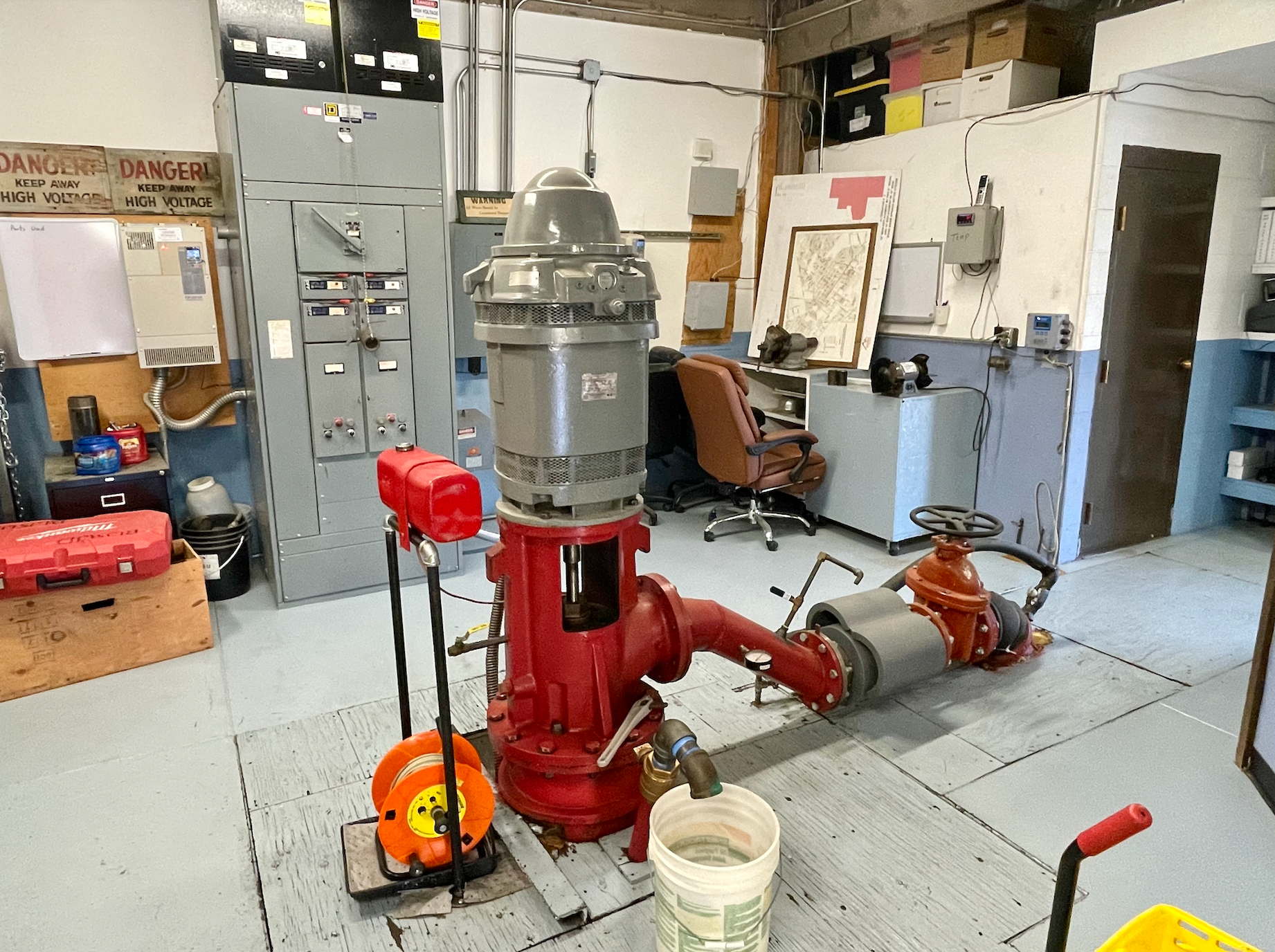
The pump that operates one of two 400-foot wells owned by the Boise Warm Springs Water District. (Blake Hunter / City Cast Boise)
The Springs’ Uses Over the Centuries
The hot springs have a long history as a prominent gathering place for Shoshone, Bannock, and Northern Paiute peoples before European colonization, and are the site of annual Return of the Boise Valley People Day gatherings.
Even though you normally can’t see them, the springs have made an indelible mark on Boise history too. They’re the namesake for Warm Springs Avenue, one of the city’s oldest and most affluent neighborhoods, and the original source of hot water for the Natatorium.
Founded by C.W. Moore (as in, the city’s wealthiest man in the late 19th century and namesake of the water wheel park and apartment complex downtown), the water district captured the springs for Warm Springs Avenue residents. His large Queen Anne-style mansion on Warm Springs and Walnut Street was one of the nation’s first houses to be heated with geothermal water.