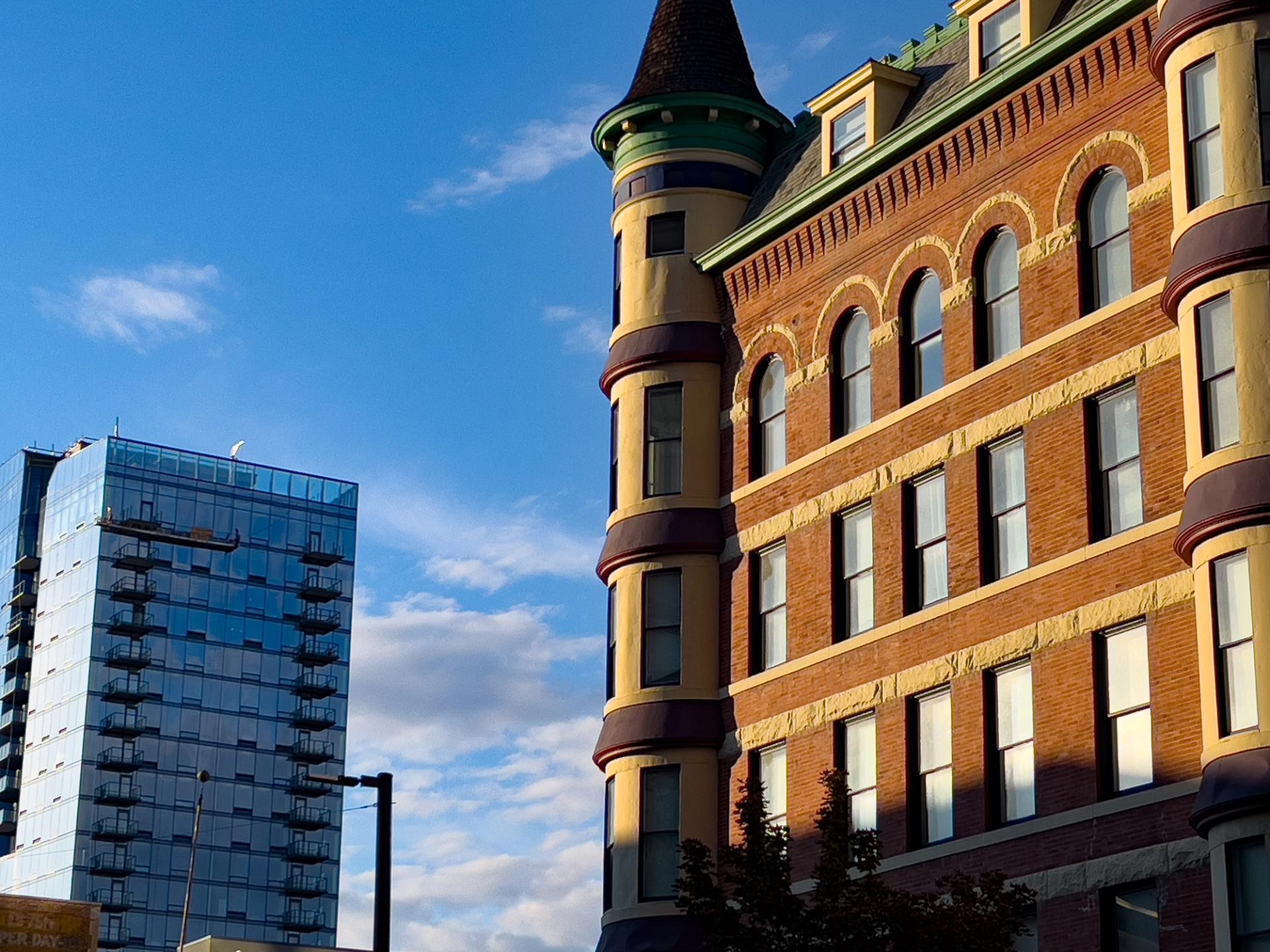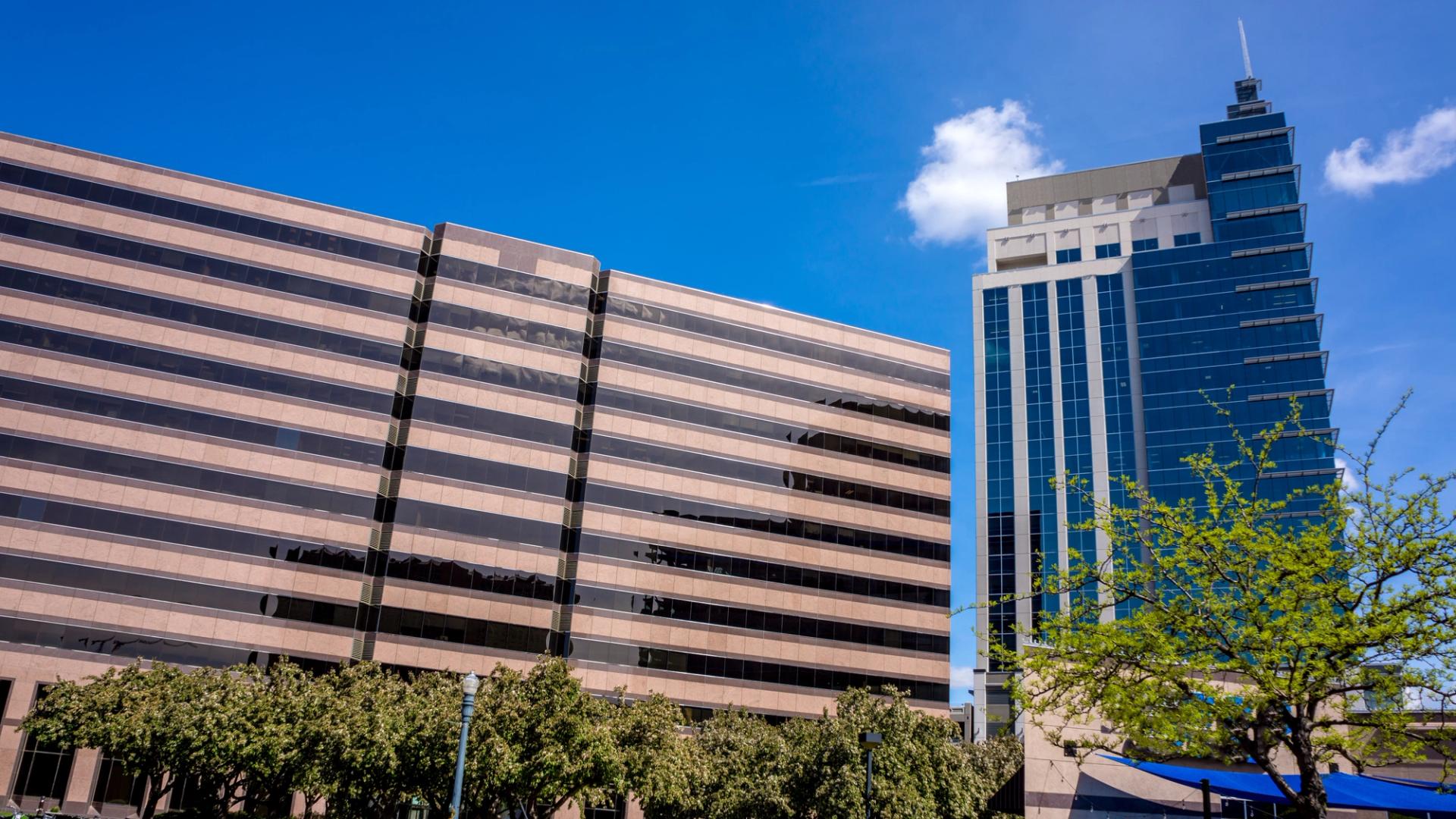
The new Arthur building in downtown Boise tried to make a run for the title of tallest building in the state, but design changes amid soaring construction costs restricted it to second place. Thus 8th and Main, which houses Zions Bank and a collection of other businesses, remains the only building over 300 feet tall.
But between 1987 and 2012, the current site of 8th and Main was an eyesore known as the “Boise Hole” or simply “the pit.” According to a local legend, a curse laid on the pit, which a series of development failures only entrenched deeper into Boise lore.
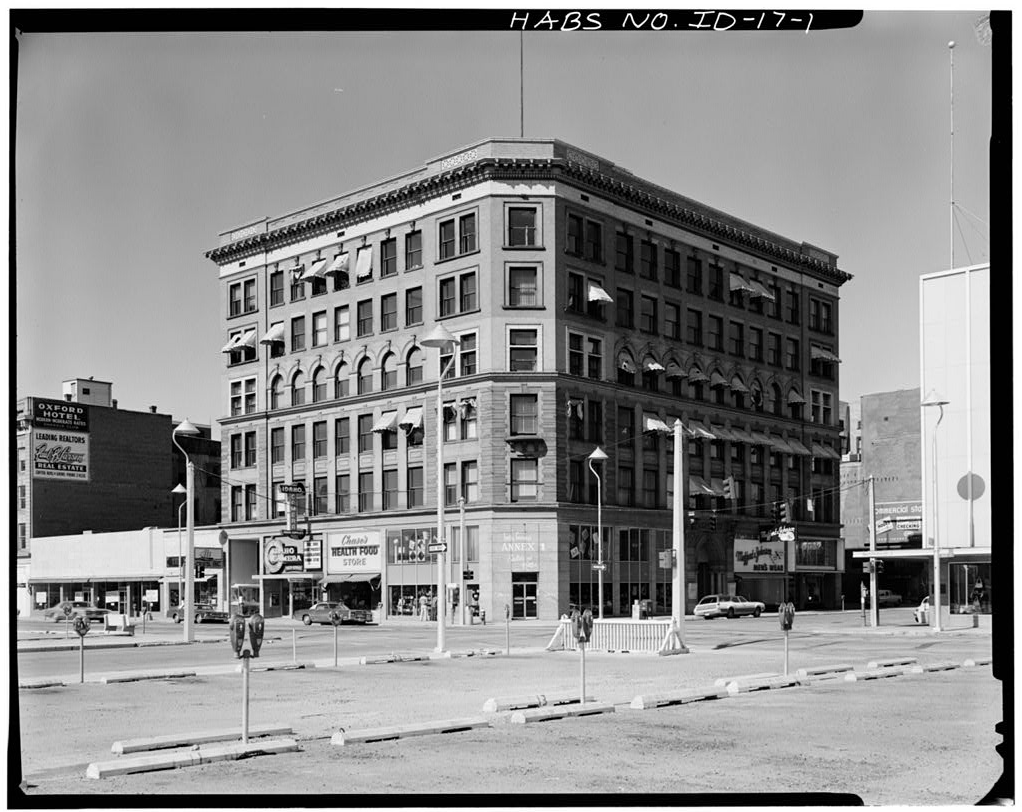
The Eastman Building in 1933, which stood until an arson fire in 1987. (Historic American Buildings Survey / Library of Congress)
The Overland, the Eastman, and the Pit
As a parcel of “developed” land, few parts of Boise have a longer history than where the 323-foot tall 8th and Main building currently stands. The Overland Hotel was built at 8th and Main Streets in 1864, the year Boise officially became a city, and became a stopping place for new American settlers moving west.
By 1904 the Eastman family had bought and razed the Overland Hotel, hoping to build a grander hotel than the new Idanha Hotel. But that plan was scrapped in favor of an office building, originally called the Overland and changed to the Eastman in the 1920s, that became one of the anchors of downtown Boise business for decades.
Then as Boise expanded outward in the 1960s and 1970s, the Boise Redevelopment Agency (BRA) bought the Eastman in a bid to turn several blocks of downtown Boise into a shopping center. The project pitted Boiseans against themselves for 20 years, during which the building was boarded up and became a frequent site of vandalism and an unofficial shelter for unhoused people. Finally, in 1987, a developer proposed a new plan to refurbish the building into a shopping center, and an eyebrow-raising two days later, the Eastman building was ablaze in an arson fire.
No one was ever charged for setting the fire, and no one took responsibility for the northwest corner of 8th and Main Streets after the Eastman’s burnt remains were demolished. In the late 1990s, after the land had sat unused for a decade, a developer dug a pit to begin the upward construction of a tower that never came to be. That attempt wasn’t the last, but it did give birth to “the pit.”
Between 1987 and 2012, a pit at 8th and Main Streets held a key piece of Boise history. (Idaho Architecture Project)
Billy Fong’s “Curse” and the Development of 8th and Main
With a large hole in the center of downtown, local lore brought the pit into mythic status. One such myth drew from a chapter of Boise history during the 1960s at the hands of the BRA. In an attempt to make downtown commercial friendly, one of the first blights in need of scrubbing — in the eyes of developers — was Chinatown.
The number of Chinese Idahoans had already dwindled from the peak during the late 1800s, encouraged by both general racism and a decrease in mining jobs that had brought Chinese immigrants to the U.S. By the time the BRA tore down seven downtown blocks including most of Chinatown, the powerful Tongs, which were gathering places and organizations for Chinese Boiseans, had diminished.
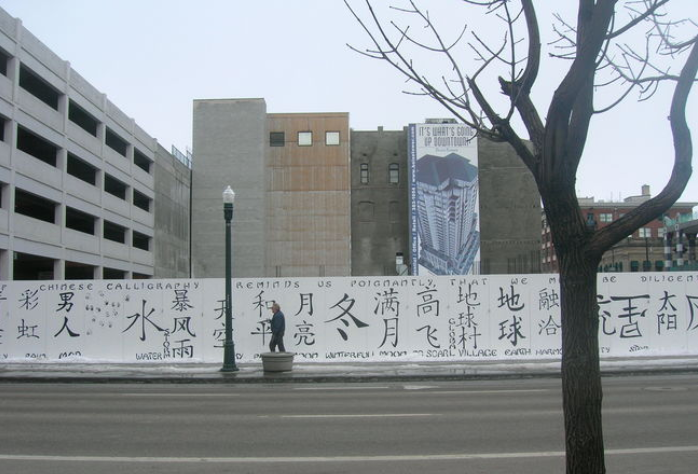
But they hadn’t disappeared. At the age of 84, Billy Fong became the last of a generation of Chinatown residents. It wasn’t until the BRA brought a wrecking ball to his home of 30 years that he left, cursing the area, and local legend took root that perhaps his curse has something to do with the unluckiness of the pit.
Curse or no curse, Zions Bank proposed a new tower at 8th and Main, and it finally stuck. The building’s structure became a source of debate, however, when early plans called for gold plating to cover the spire, which would have made the temple-like structure even more comparable to Latter-Day Saints temples.
Construction began by filling the pit in 2012, and the new building opened officially in 2014 with a ceremony to cleanse the land of misfortune. A performance by the Goo Goo Dolls might have helped.