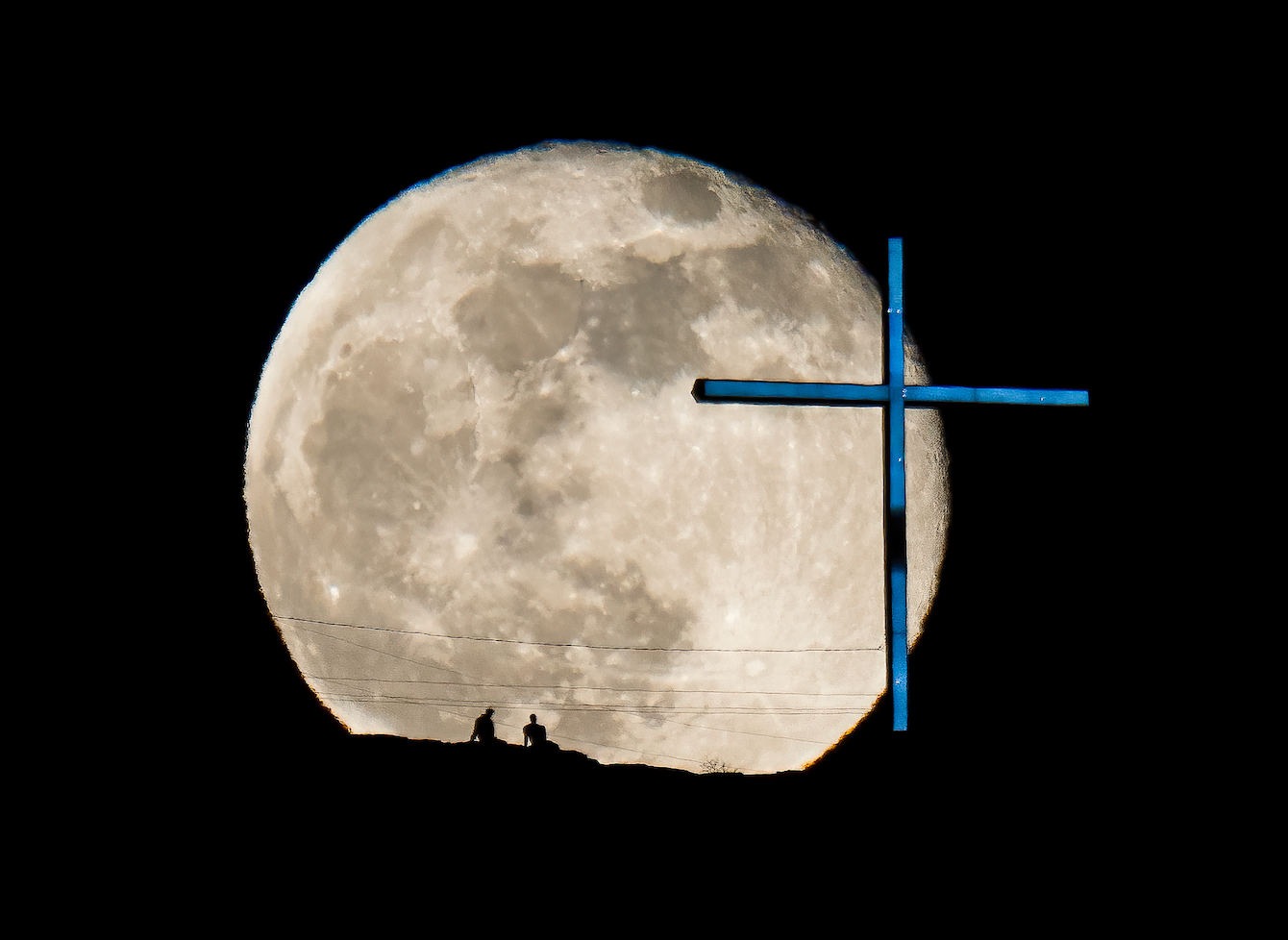
In the mid-1950s, the Boys of Boise scandal was the City of Trees’ own version of Hollywood’s Red Scare hunt for communists. So how does it connect to the Table Rock cross, a familiar and even comforting sight for many Boiseans?
I recently traced the history on the City Cast Boise podcast, and went further back to pre-colonization, when the mountain that bears Table Rock was a spiritual symbol of another kind.
What Was the Scandal?
In October 1955, a Boise police officer began investigating men who were allegedly meeting in public parks to have sex with teenage boys. The Idaho Statesman covered the allegations almost daily, and the investigation quickly expanded to consenting adults.
The Boise Police Department hired a private investigator in the case, and 16 men were charged over the next two years. It’s difficult to determine how many people were investigated in total. Some local historians said in the “Fall of ‘55” documentary about the scandal that author John Gerassi greatly exaggerated the number of allegations in his 1966 book “The Boys of Boise.”
The moral panic brought national media attention, especially when the scandal increasingly focused on well-known men in consensual gay relationships.
“Boise was known for the ‘Boys of Boise’ and I think it was embarrassing,” Alan Virta, a former Boise State librarian, told me a few years ago. “And people didn’t want to bring it up. Plus, the whole situation broke families up and caused a lot of grief in Boise.”
How Did the Scandal Lead to the Cross?
A Christian civic and service organization called the Junior Chamber of Commerce Club (also known as the Jaycees) dedicated itself to declaring Boise’s allegiance to Christianity — and thus against communism and homosexuality.
In December 1955, amidst the scandal, the Jaycees dug the hole that has since cradled the cross on top of Table Rock. By Jan. 8, 1956, it was finished.
At the time, that land was owned by the Idaho Department of Corrections. A 1971 ruling against a similar cross in Eugene, Ore. — due to a concern over having a religious symbol so publicly exhibited on publicly-owned land — worried the Jaycees. They asked to buy the land from the Board of Corrections, who turned it over to the Board of Lands, who then auctioned it off to the Jaycees for $100.
Another two decades passed, and the ACLU pointed out that the public hadn’t been notified of the auction, but never sued over the discrepancy. The news made its way to influential Chicago-based atheist Rob Sherman who delivered a speech at Boise State drumming up support for legal action to remove the cross.
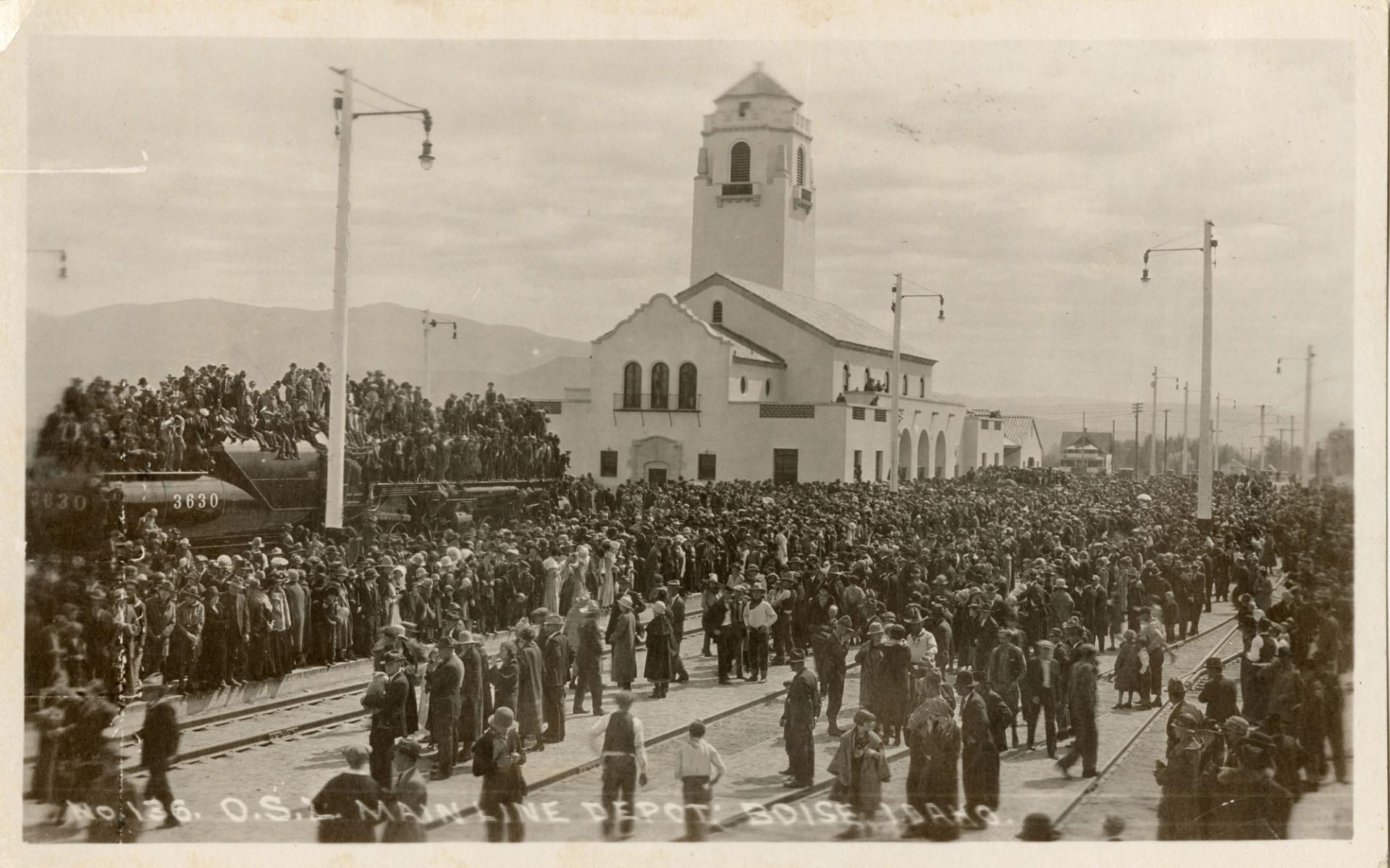
That backfired, and led to a crowd of 10,000 marching from the Boise Depot to the Capitol in support of keeping the cross, which is the largest political demonstration that I’m aware of in Idaho history (and I’ve been searching for years).
The Symbol of the Cross
The Table Rock cross is commonly referred to as a beacon of shared values among Boiseans. Its proximity to the downtown St. Luke’s hospital has comforted many visitors and patients during anticipation, grief, or recovery.
Before the cross, Table Rock was a sandstone quarry that employed masses of immigrants, who plied rock that was used in the development of downtown Boise buildings.
Before that, it was a gathering place for the Shoshone, Bannock, and Northern Paiute peoples. Every June, members of those Indigenous groups return to the Chief Eagle Eye Reserve to retrace their ancestor’s footsteps.
Those ancestors were forcibly removed from the valley, and never signed over the land they had called home for millenia. Throughout the Americas, Christianity and the symbol of the cross were used to justify genocide and the forced relocation and internment of Indigenous people. Now, it stands on the hill to signify one powerful group of people who live here.
As Pride Month winds down, this Boise landmark gives us the opportunity to examine not only how it came to be, but what came before it.