Local governance is full of words that can make the eyes glaze over. Supplemental levies or the name of an obscure commission might escape us while we can remember the name of the current sixth most popular presidential candidate. Local civics isn’t always sexy, but it does shape our days — especially when government and business collide, as they do in urban renewal.
What Are Urban Renewal Districts?
The process of urban renewal functions differently in every city, but during the latter half of the 20th century a time-based tax system became popular across the U.S.
The Capital City Development Corporation (CCDC) is Boise’s urban renewal agency. To create an urban renewal district, CCDC selects an area of the city and assesses its total property value as a base. From then until the end of the renewal district’s timeline, all increases in property taxes go back into the district for improvement projects.
In most states, this process is called tax increment financing. In Idaho, it was written into law as “revenue allocation” to avoid using the word “tax.”
CCDC’s Board of Commissioners works with tax dollars, but they’re not elected officials. The mayor selects the board members and Boise City Council approves them for five-year terms. Mayor Lauren McLean also serves as the secretary and treasurer of the commission, and the other members are higher education officials, investment bankers, and architects.
Where is Boise’s Current Focus?
CCDC currently has six open renewal districts, half of which were formed in the last five years.
Increasingly, CCDC is working its way outward from the downtown core to strategically improve corridors like State Street and coordinate with other existing projects like those surrounding the Boise Airport.
- River-Myrtle Old Boise District (1995 - 2025)
- Westside District (2002 - 2026)
- 30th Street District (2013 - 2033)
- Shoreline District (2019 - 2039)
- Gateway East District (2019 - 2039)
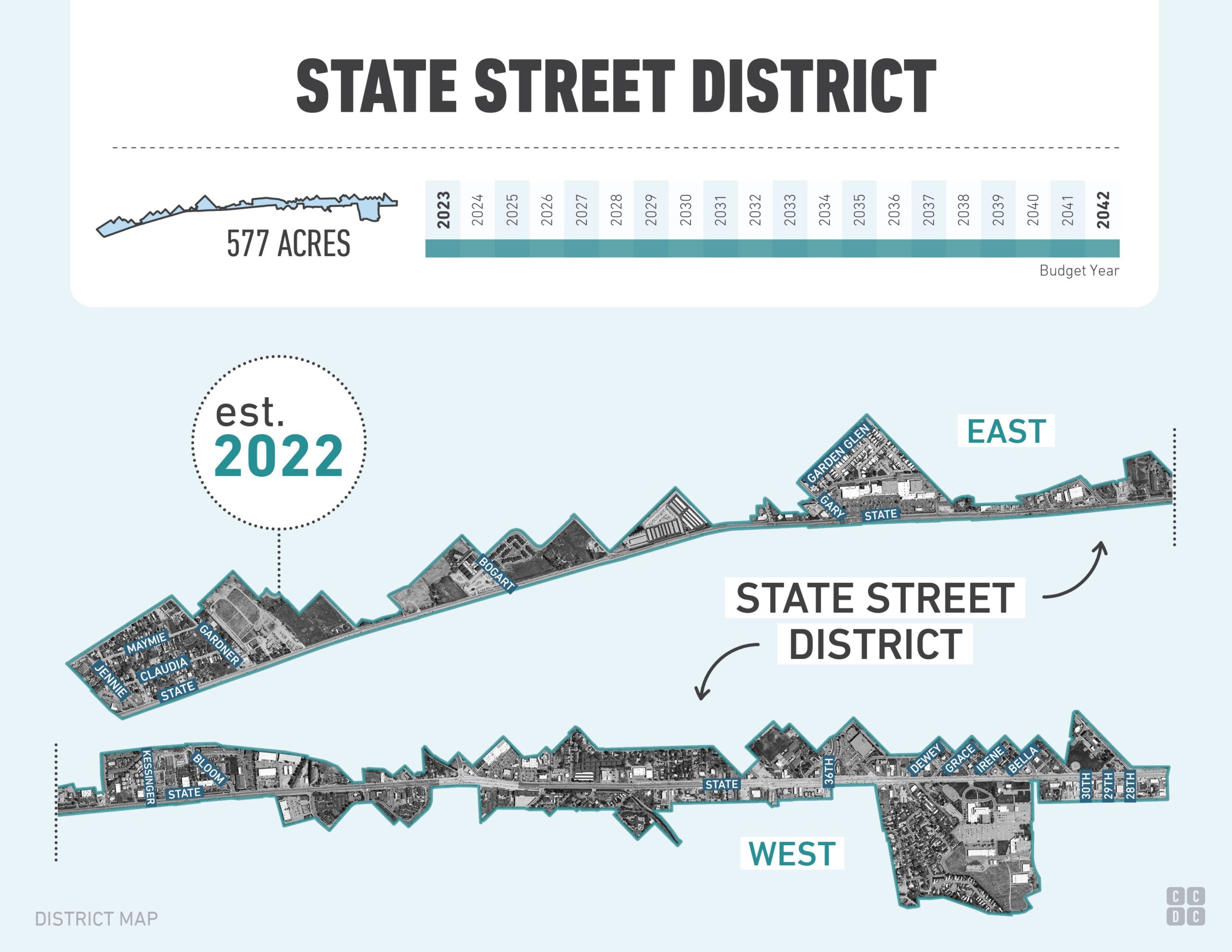
- State Street District (2022 - 2042)
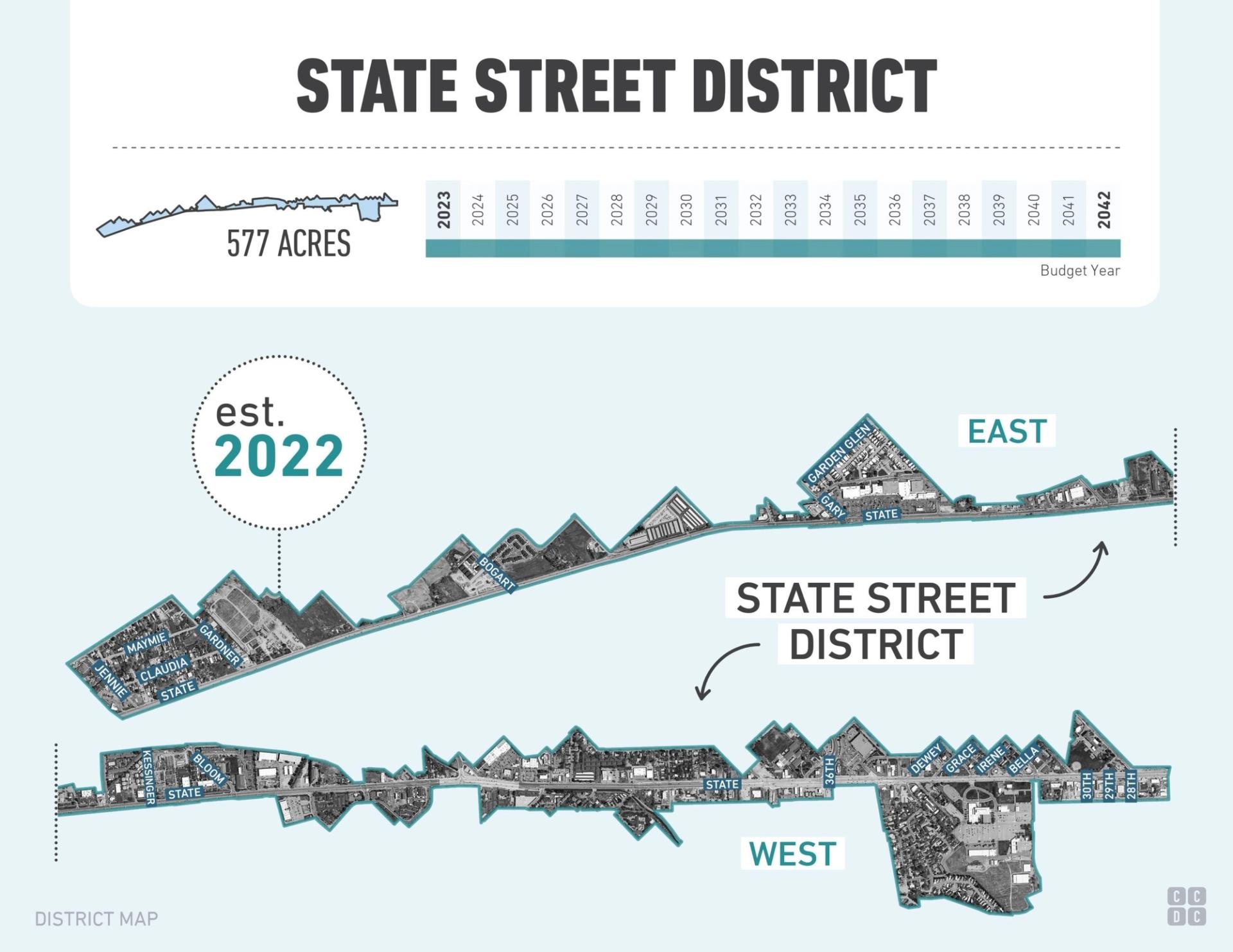
A map of Boise’s newest renewal district, which will expire in 2042. (CCDC)
How Did Urban Renewal Evolve in Boise?
Urban renewal can be a double-edged sword, especially if developments sweep out old buildings in favor of new ones, gentrifying and pricing out locals. In the mid-20th century, such urban renewal swept out Boise’s Chinatown.
Historically, many of Boise’s urban renewal efforts have focused on downtown Boise. Zion Bank’s 8th and Main building stands as the tallest building in the state, but it only reached such great heights after decades of failed attempts at a downtown mall, an open pit in the center of the city, and resulting sprawl to the suburbs.
This ten-minute documentary shows how the Boise Redevelopment Agency, which later changed its name to CCDC, tried to adapt to the shifting downtown landscape for decades.