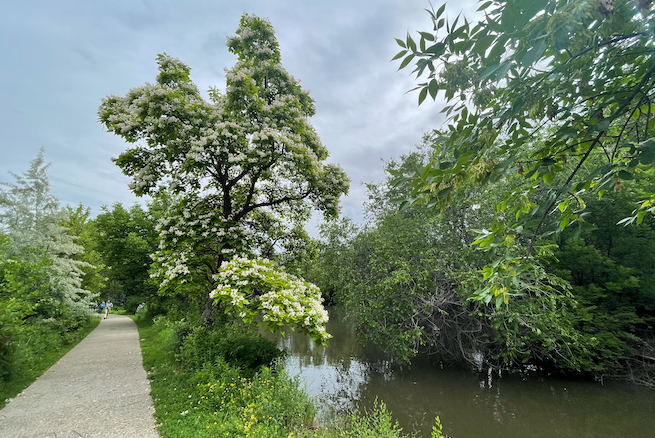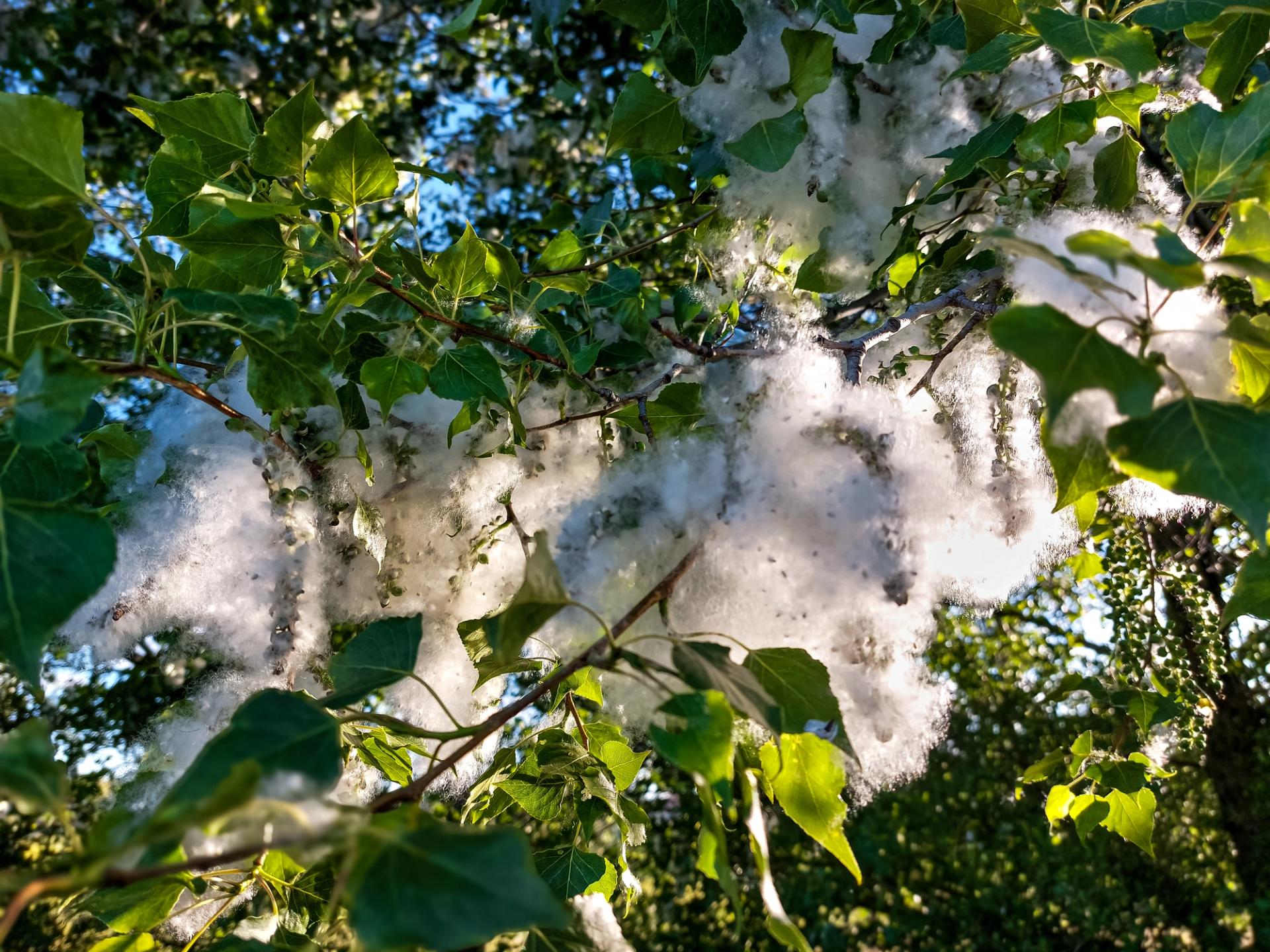
An evening walk on the Greenbelt during late June looks like a summer snowglobe version of Boise, with cottonwood seeds floating down and catching the golden hour light. It’s beautiful, but you might need to break out the antihistamines.
Identifying Black Cottonwoods
Among many species of cottonwood trees, the ones native to our area are black cottonwoods, named thus because of their dark gray bark.
If you see a large tree near the banks of the Boise River, it’s probably a cottonwood. Right now the snow they produce makes them clearly identifiable, but other easy identifiers include their size of up to 100 feet tall, their long heart-shaped leaves, and slight fragrance. They’re also dioecious, which means each tree only produces either “male” or “female” flowers.
The seeds of cottonwoods grow in downy white tufts (which are technically a fruit) that float or get transported by animals to the ground. Once there, they can incite hay fever and become choking hazards for cyclists. Right now, they’re literally piling in drifts on the sides of the Greenbelt.
Cottonwoods Can Be a Nuisance. But Are They Good?
The cottonwoods have been a double-edged sword for the Treasure Valley’s inhabitants for centuries, apparently. In 1881, the Idaho Statesman tried to compel citizens to cut the trees down because of the inconveniences they present (the disgusting Callery pear trees hadn’t invaded yet).
But the cottonwoods were here long before the Statesman, or before any Europeans settled here. In fact, they’re the city’s namesake in a way: as the only large native tree on the Boise River, they were likely the trees that French trappers referred to when they looked over the valley and said “les bois!”

Most importantly, the Boise River would look nothing like it does without the cottonwoods. The trees hold vast amounts of water in their root systems, and grow downwards in all directions, holding the soil together to create stable shores.