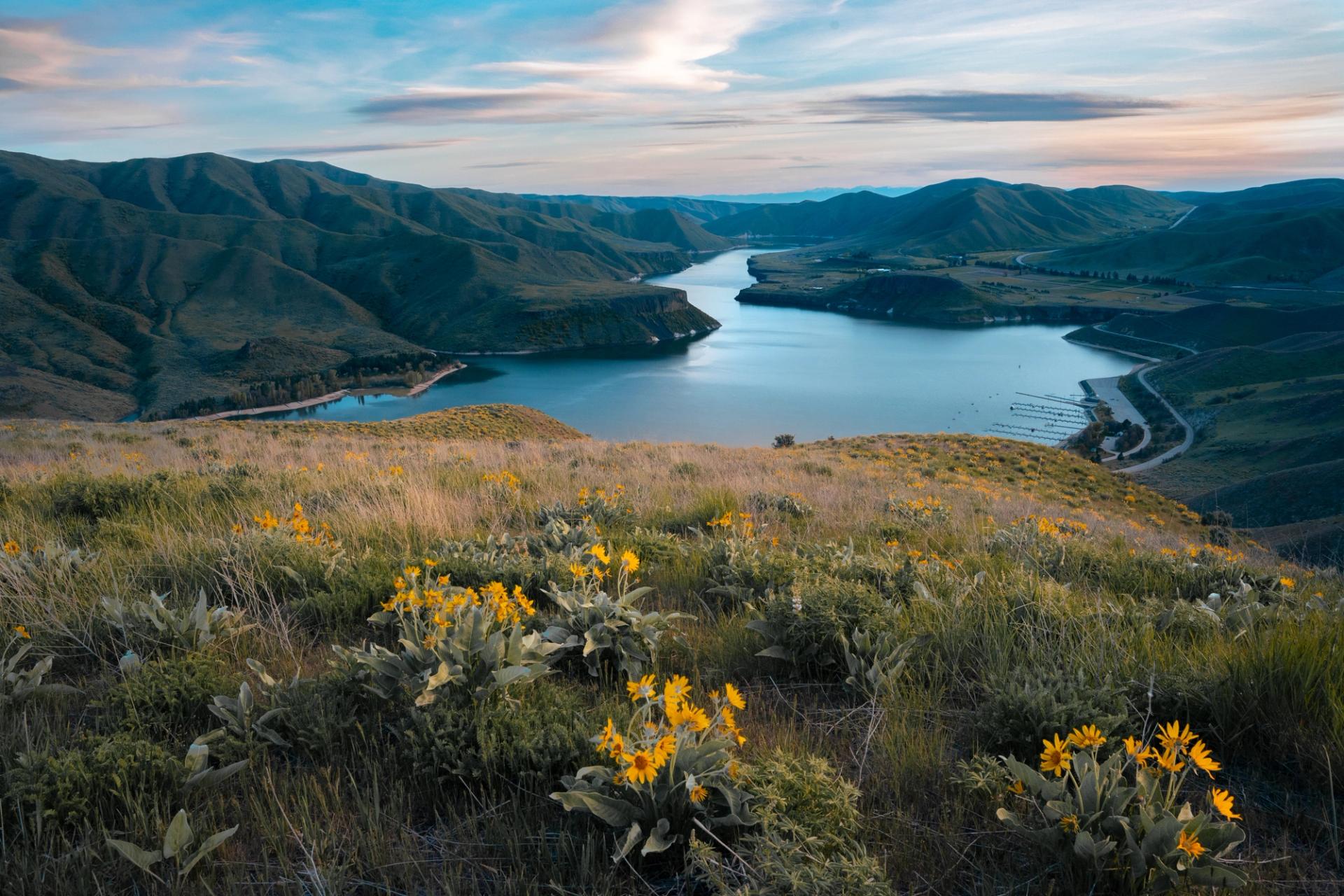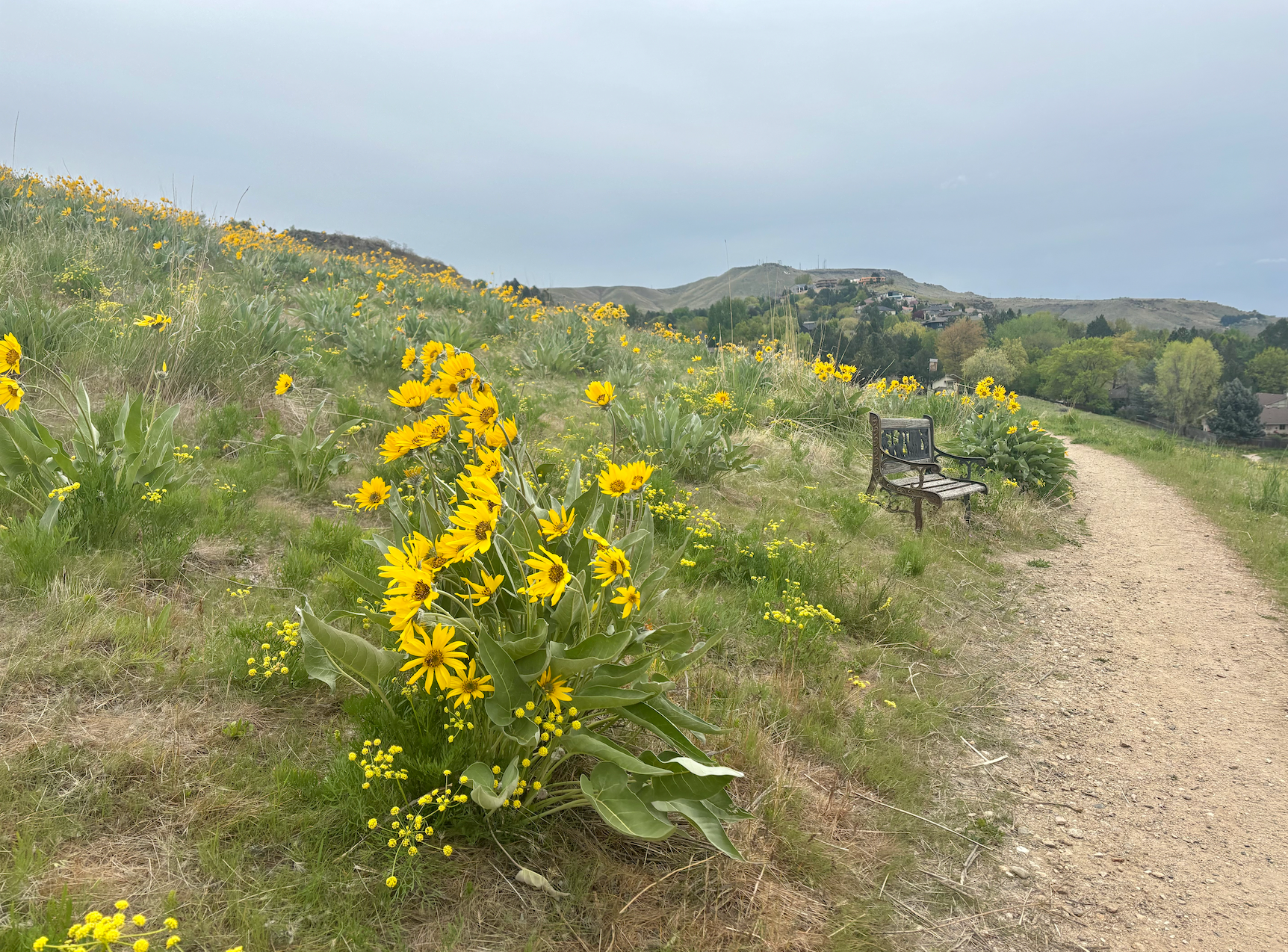
Arrowleaf balsamroot, Balsamorhiza sagittata, is native to the western United States, and a poster child of Idaho’s sunny mountainsides.
Where To See Arrowleaf Balsamroot
The plants are flowering right now in the Boise Foothills, providing the highest concentration of color you’ll be able to see on the slopes all year. A short walk from any trailhead up into the hills will lead you to the blossoms, and in some places the entire landscape seems to be full of them.
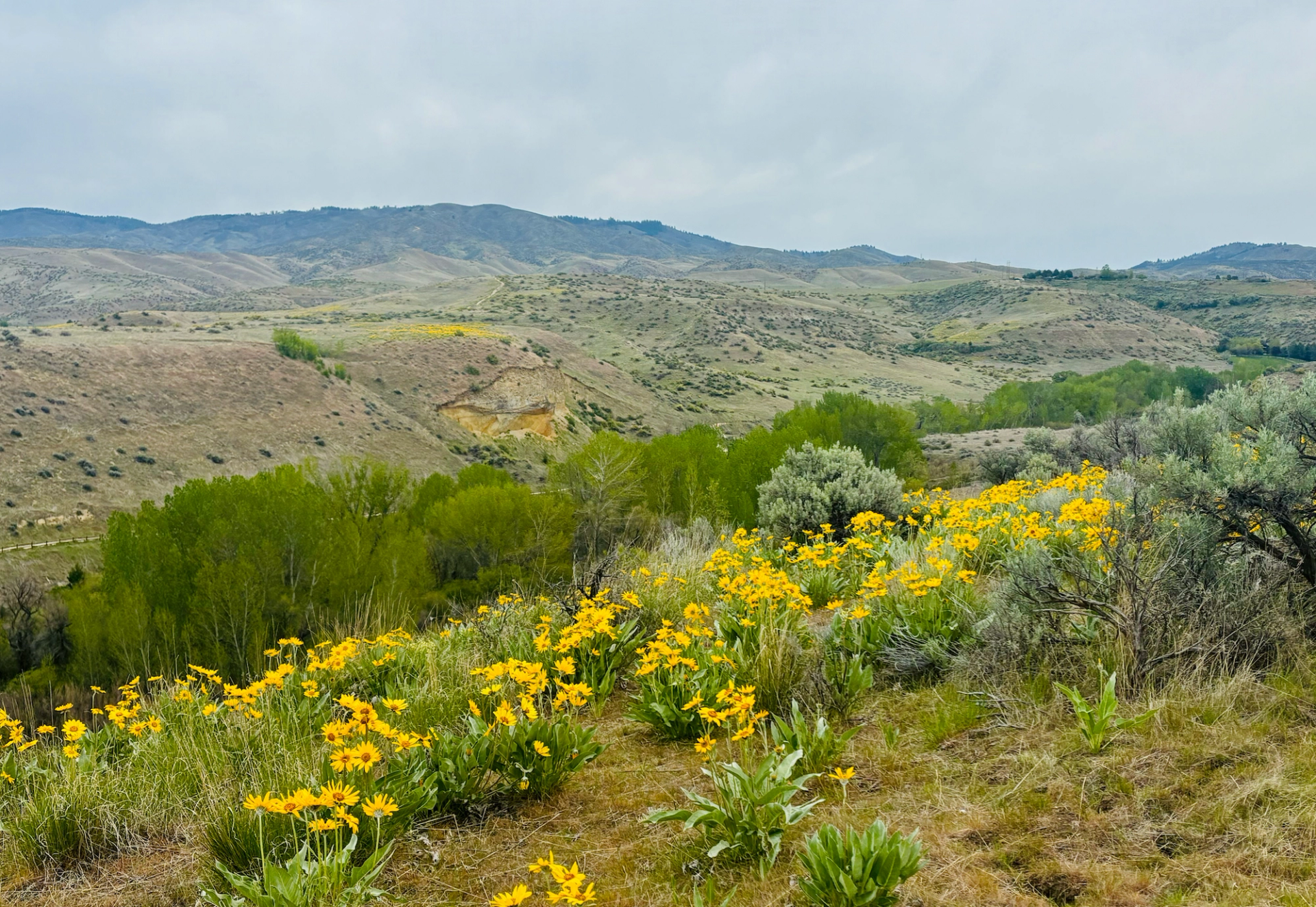
The view from Cottonweed Creek trail (accessed from the Fort Boise trailhead) on Sunday. (Blake Hunter / City Cast Boise)
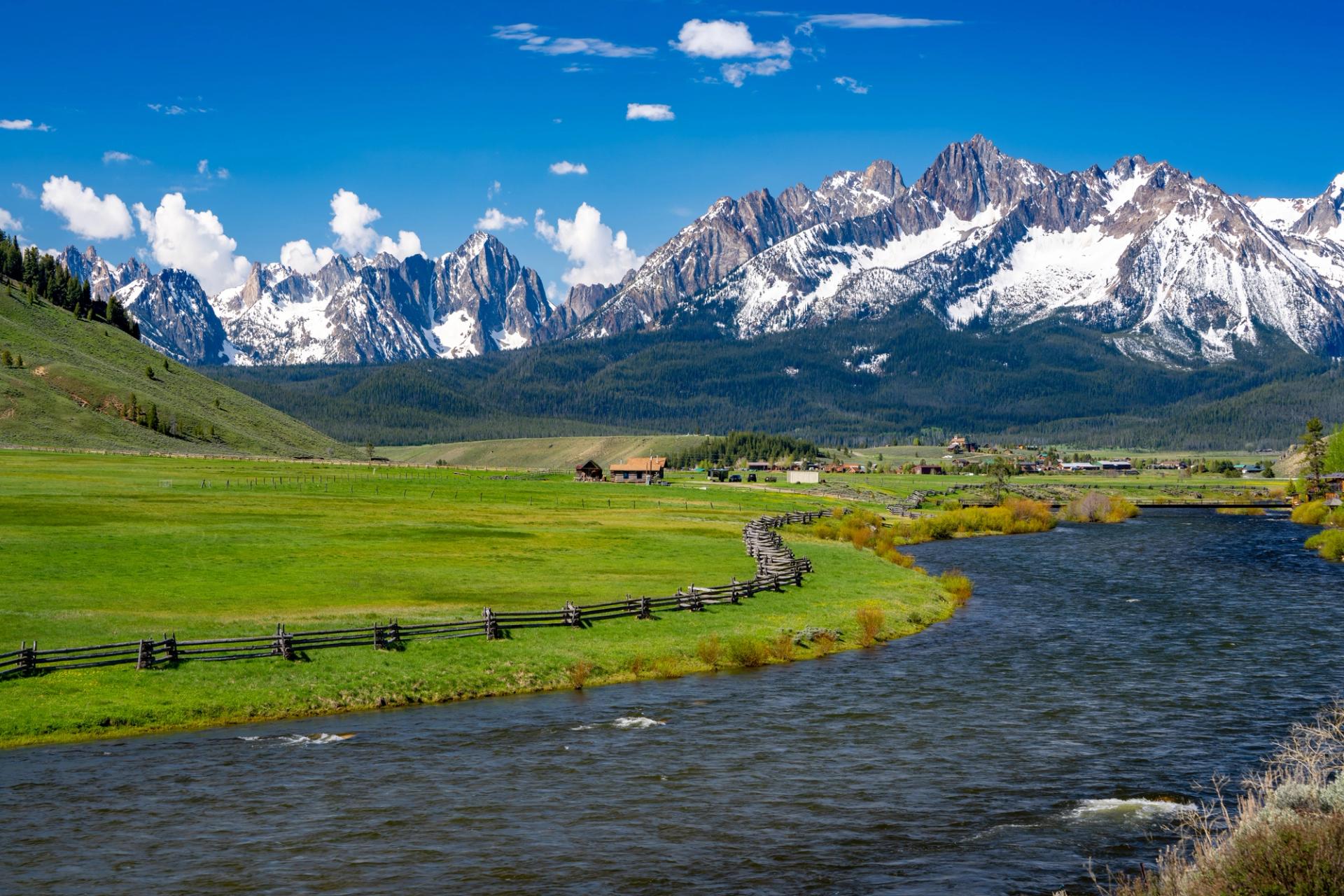
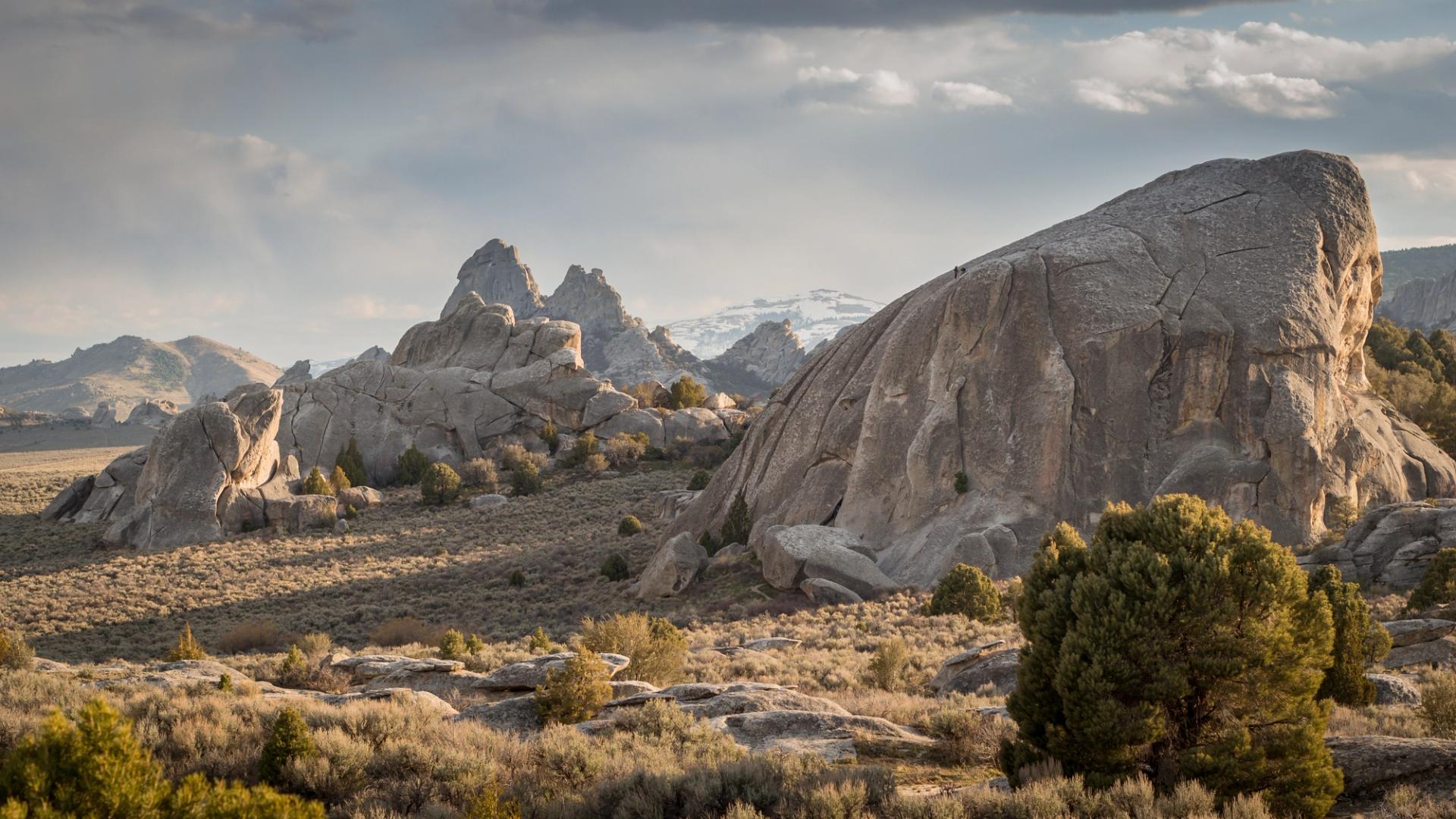
With Boise’s lower elevation, we get flowers earlier than the rest of southern Idaho. In a few weeks, the arrowleaf balsamroot in Sun Valley, the Sawtooths, and Craters of the Moon will be filling the gaps between sagebrush with yellow.
The Plant’s History and Uses
The plant’s name says it all: Its leaves are shaped like arrowheads, and its roots have a balsam-like fragrance. But being native to this area, it’s hard to capture how important this plant has been for this land’s inhabitants for centuries.
The leaves, stems, and flowers are all prime forage material for many animals, and its massive taproot system (up to nine feet long and weighing over 20 pounds) has been used by Indigenous people to treat respiratory and immune system issues. The roots can even be dried and ground up to be used as flour in cakes.
The leaves themselves are made up of 30% protein, which is partially why they’re a favorite winter food source for several species, particularly mule deer, elk, and bighorn sheep. The leaves of the balsamroot are especially nutritious in the spring, providing crucial calories for recovering from the winter.