In mid-July, an average of 14,000-16,000 vehicles traverse Highway 21 along Lucky Peak Reservoir everyday. Right now, traffic is at its lowest, at around 8,000 vehicles per day. But for mule deer, it’s prime Lucky Peak season.
The Boise River Deer Migration Route
Two herds totalling around 30,000 deer migrate parallel to one another, sharing the Middle Fork of the Boise River. On the north side, Boise River mule deer go as far north and east as the Sawtooths in the summer, and move to the foothills north of Lucky Peak Reservoir in the winter. The other herd, the Blacks Creek-Danskin deer, run south of the river and reservoir.
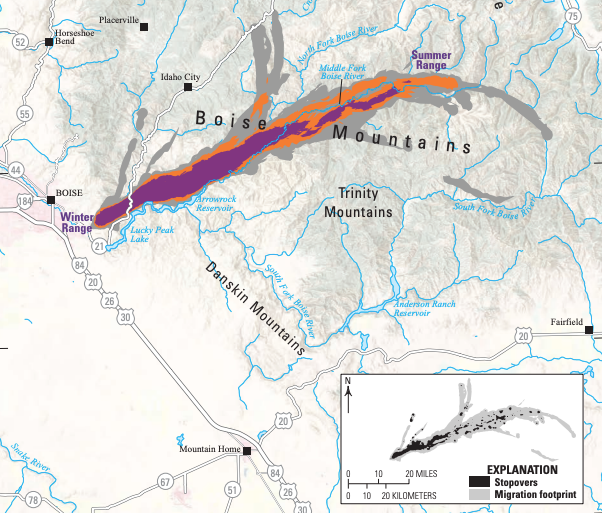
This USGS report has information on many of Idaho's deer herds, including those in the Middle Fork of the Boise River, which feeds Lucky Peak. (U. S. Geological Survey)
The map above shows the Boise River deer migration, which Idaho Fish and Game officials say averages 45.7 miles. The lengthiest journey recorded between 2011 and 2018 was just under 100 miles, while the laziest (perhaps smartest) deer only traveled 12.7 miles between summer and winter.
As you might notice on the map (or have seen in person yourself) the route includes crossing Highway 21 at the migration’s western extreme. The deer are heading for lower elevations, where they can find vegetation that isn’t buried under snow. Instead, they often find a dangerous highway.
The New Highway 21 Overpass
To reduce deadly and costly collisions between vehicles and deer, multiple agencies contributed funds for the construction of a $6.5 million wildlife overpass, the first of its kind in Idaho. Known as the Cervidae Peak overpass and completed last fall, officials hope it will drive collisions with big game down by 80%.
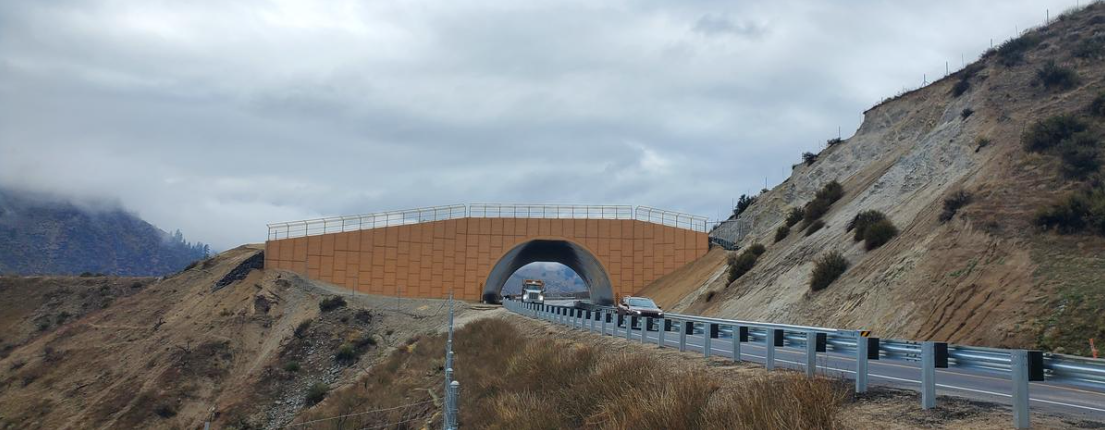
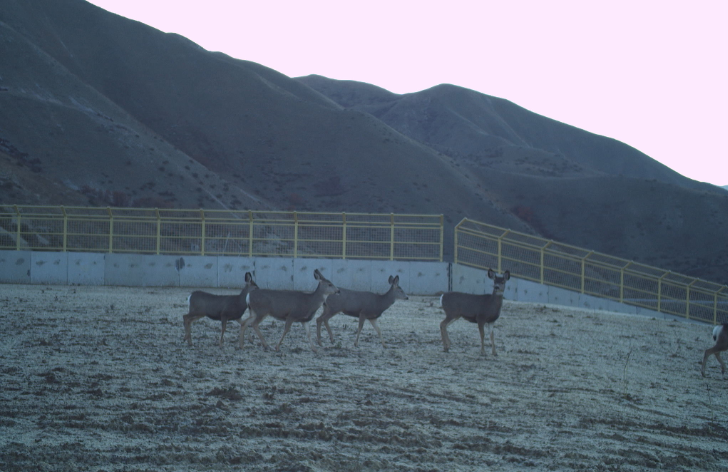
The new overpass between Idaho City and Lucky Peak accompanies a decade-old underpass along the same road. (Idaho Fish and Game)
While migrating animals need time to learn to use the overpass, some of them already have. Photos from the overpass showed deer crossing the highway safely in mid-November.