This article was written by City Cast editor Adrian González.
Turkeys are a hot topic across the country this time of year — I’m already planning my leftover meals for the week following Thanksgiving — but there’s a version of the big bird that gobbles year-round in Idaho: the wild turkey. How did they get here?
Wildlife Management
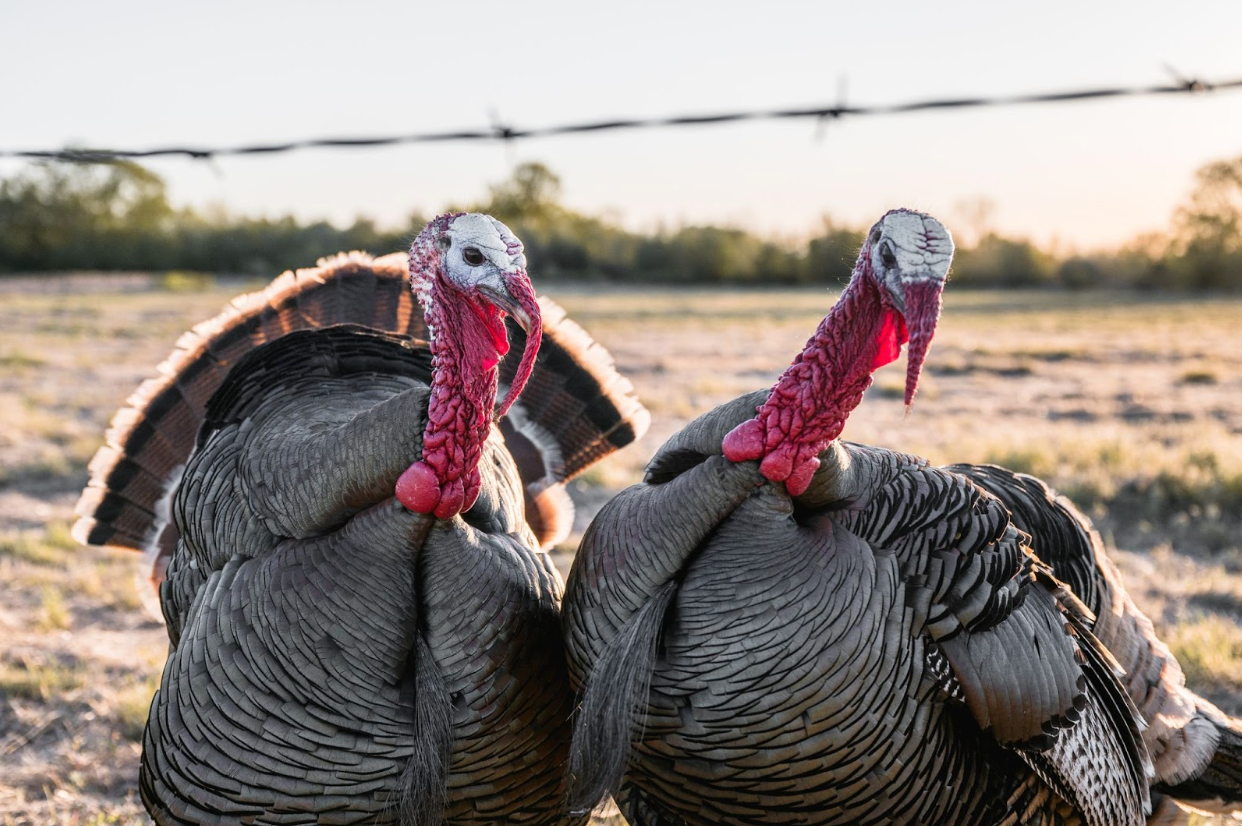
As you might have guessed, wild turkeys are not native to Idaho. Idaho Fish & Game first introduced them to the state in 1961 to provide hunting opportunities and better manage wildlife. Merriam’s, Eastern, Rio Grande, and hybrid wild turkeys were originally trapped and released across Idaho through 2008, all of which are still roaming Treasure Valley, but one in particular has taken to Idaho the most: Merriam’s, which is most commonly found in the mountains of the Panhandle, Clearwater, and Southwest regions.
Standing at around 45 inches tall and weighing up to 24 pounds, wild turkeys are one of the largest wild birds in Idaho. They are capable of quick bursts of flight, although their sheer size keeps them from flying for extended periods of time. They’re an objectively regal bird, but perhaps my favorite tidbit is that flocks will fly into large trees at sundown to roost for the night.
Faraway Feathers
Now synonymous with annual family arguments at the dinner table, turkeys were part of the Americas long before Europeans arrived. In fact, the wild turkeys commonly spotted in Boise (and sometimes terrorizing its residents) are direct descendants of the subspecies first domesticated in Mexico’s Yucatán Peninsula thousands of years ago. Spanish colonists took some of the turkeys back home in the 1500s, where they bred them into the feathery fowls we know (and eat) today.
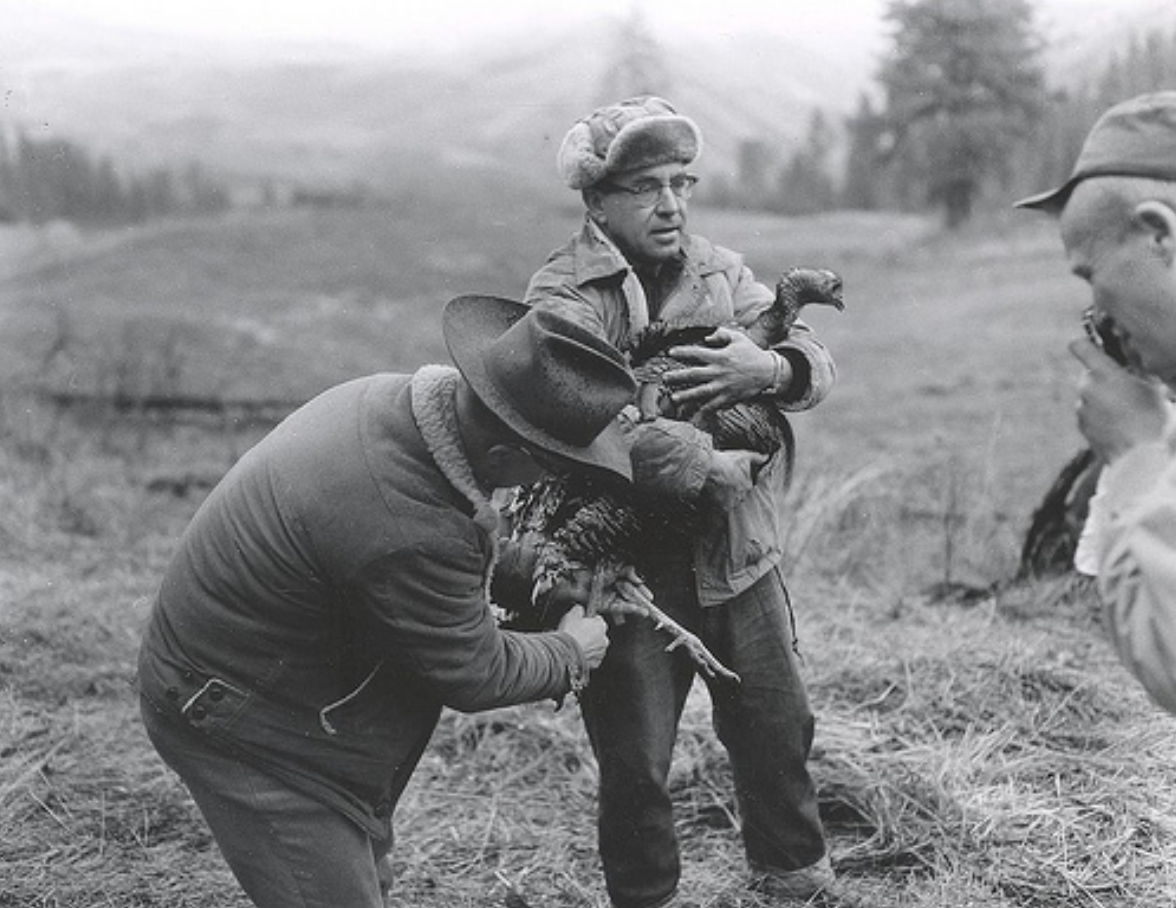
The moment of release of the very first wild turkey in Idaho in 1961. (Courtesy of Idaho Wildlife Fish & Game)
The restoration of the wild turkey beyond its pre-Columbian range is regarded as one of the greatest successes of modern wildlife management. Certainly something for which to be thankful.